The right chimney cap depends on your flue, your fuel and your weather. Compare cap types, materials and real models, then use the finder to match a cap to your chimney.
Pick the problem you need the cap to solve, or the chimney you have. We will send you to the guide that compares caps for exactly that.
Key Takeaways
The best chimney cap for most masonry chimneys is a 304 stainless steel cap with 3/4 inch mesh, sized to the outside of the flue tile.
Single flue caps bolt or clamp to one flue tile. Multi flue caps cover the whole crown and protect every flue at once.
Stainless lasts for decades and suits every fuel. Copper costs more and looks premium. Galvanized is cheapest but rusts sooner, and HY-C advises against black galvanized when wood, oil, coal or pellets are the main fuel.
Prefab and metal chimneys need the cap made for that pipe system. A generic masonry cap can void the chimney listing.
Expect roughly $200 to $850 for a cap with installation, according to HomeGuide, with copper and multi flue caps at the top of that range.
Our top picks
We earn a commission if you buy through our links, at no extra cost to you. Picks are based on published specs and fit rules, not hands-on testing. How we choose.
Heavy 16 gauge base flanges for a tight grip on the tile
Stainless hood and mesh for every fuel
Sold in the common clay tile sizes
Widely stocked at hardware and farm stores
What we don't like
3/4 in mesh is not a spark arrestor under the IRC
Bolt-on only; a cracked tile needs repair first
This is the cap we would put on most single flue masonry chimneys. The hood is 24 gauge stainless, the mesh is 18 gauge and the base is a heavier 16 gauge, so the part that clamps to the tile is the strongest part. It suits wood, gas and oil, and the common sizes are easy to find. If your local code calls for a spark arrestor, choose a 5/8 in mesh model instead.
Material: Stainless steel | Hood: 24 gauge | Mesh: 18 gauge, 3/4 in | Base: 16 gauge, slotted hex bolts | Sizes: 9 x 9 to 13 x 18 in tiles
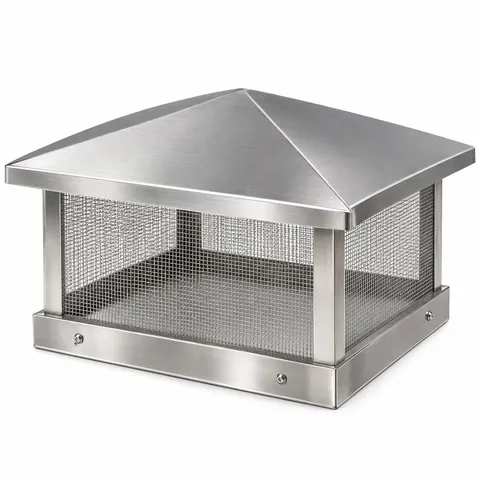
2. Best multi-flue
Draft King Custom BigTop Stainless Multi-Flue Cap
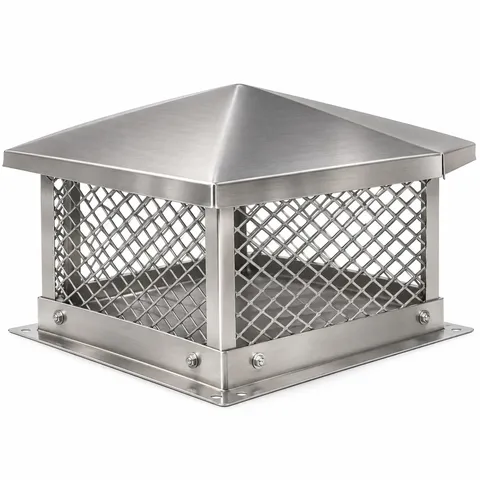
Illustration of this cap style, not the exact product.
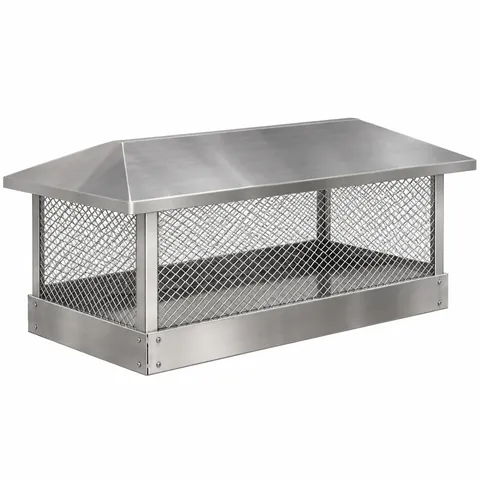
Our pick for chimneys with two or more flues. It is built to your crown measurements in 304 stainless and carries a lifetime warranty, and one cap protects every flue and the crown at once.
Mesh: 18 gauge 304 stainless | Mesh heights: 8, 10 or 14 in | Warranty: Lifetime on stainless | Made in: USA
3. Best budget
HY-C Shelter Black Galvanized Single Flue Cap (SC99)
Illustration of this cap style, not the exact product.
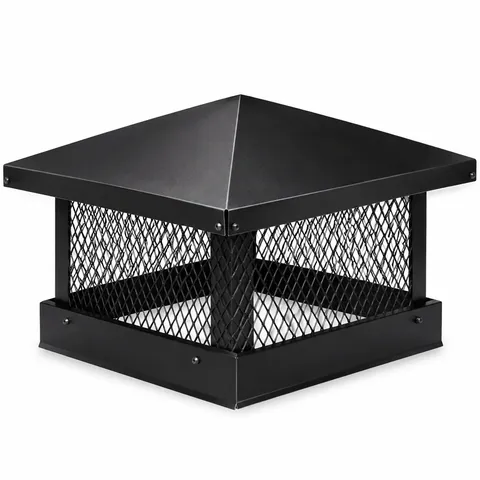
The classic budget cap. It does the basic jobs, keeping rain and animals out of a small flue, at a low price. Put it on a gas flue or an unused chimney in a mild climate, not on a busy wood stove.
Material: Galvanized steel, black powder coat | Hood: 24 gauge | Mesh: 3/4 in | Fits: 9 x 9 in tile | Weight: 4 lb
4. Best copper
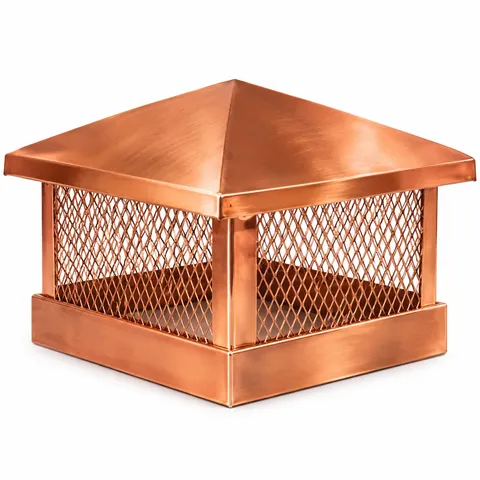
HY-C Draft King Copper Single Flue Cap
Illustration of this cap style, not the exact product.
Our pick when looks matter. Every part is copper, so nothing reacts with the mesh, and the hood lifts off for sweeping. Expect the penny finish to turn brown and then green over the years.
5/8 in may not meet the stricter IRC 1/2 in limit; check locally
Finer mesh needs cleaning more often
Where embers are a concern, this is the cap we would look at first. HY-C sells it mainly for spark protection, and the 5/8 in mesh is the figure commonly cited for California. Under the IRC model code the opening must be smaller than 1/2 in, so confirm with your local fire authority before buying.
Material: 304 stainless steel | Mesh: 5/8 in | Fits: Range of clay tiles up to 13 x 13 in
6. Best for wind
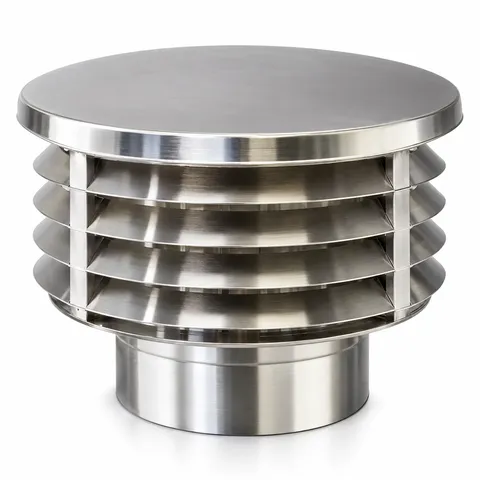
Vacu-Stack Stainless Round Cap
Illustration of this cap style, not the exact product.
Our pick for gusty, swirling wind. The Vacu-Stack has no moving parts to stick, and its shape uses wind from any side to pull smoke up. Size it carefully, since retailers warn against undersizing.
Material: Type 304 stainless | Fits: Round single wall and Class A pipe; masonry with adapter | Spark screen: Sold separately
7. Best for wood stove pipe
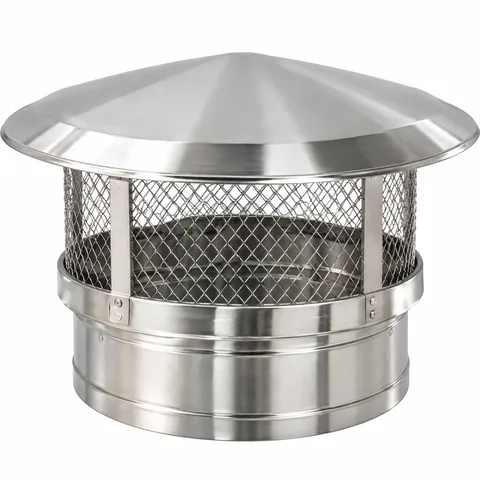
DuraVent DuraTech Chimney Cap
Illustration of this cap style, not the exact product.
The Shelter Pro swaps loose corner brackets for a 2 1/4 in locking band, which is the better choice on windy roofs or where a previous cap kept working loose. Its smaller lid is designed for flues set side by side, where a wide lid would hit the next tile. The trade off is a little less rain protection than a wide lid cap.
Material: 304 stainless steel | Gauge: 24 | Mesh: 3/4 in | Locking band: 2 1/4 in tall
9. Best chase cover
Rockford Stainless Steel Chase Cover
Illustration of this cap style, not the exact product.
Our pick for replacing a rusty chase cover. It is custom made in 304 stainless with welded seams and a lifetime warranty against rust, and you can upgrade to 22 or 20 gauge.
Material: 304 stainless | Gauge: 24 standard, 22 or 20 optional | Seams: Welded | Warranty: Lifetime against rust and defects
10. Best for gas B-vent
DuraVent Type B Gas Vent Cap
Illustration of this cap style, not the exact product.
For gas fireplaces and appliances that vent through Type B pipe, use the B-vent cap listed for that pipe. This is DuraVent's.
System: DuraVent Type B gas vent | Use: Where B-vent ends above the roof
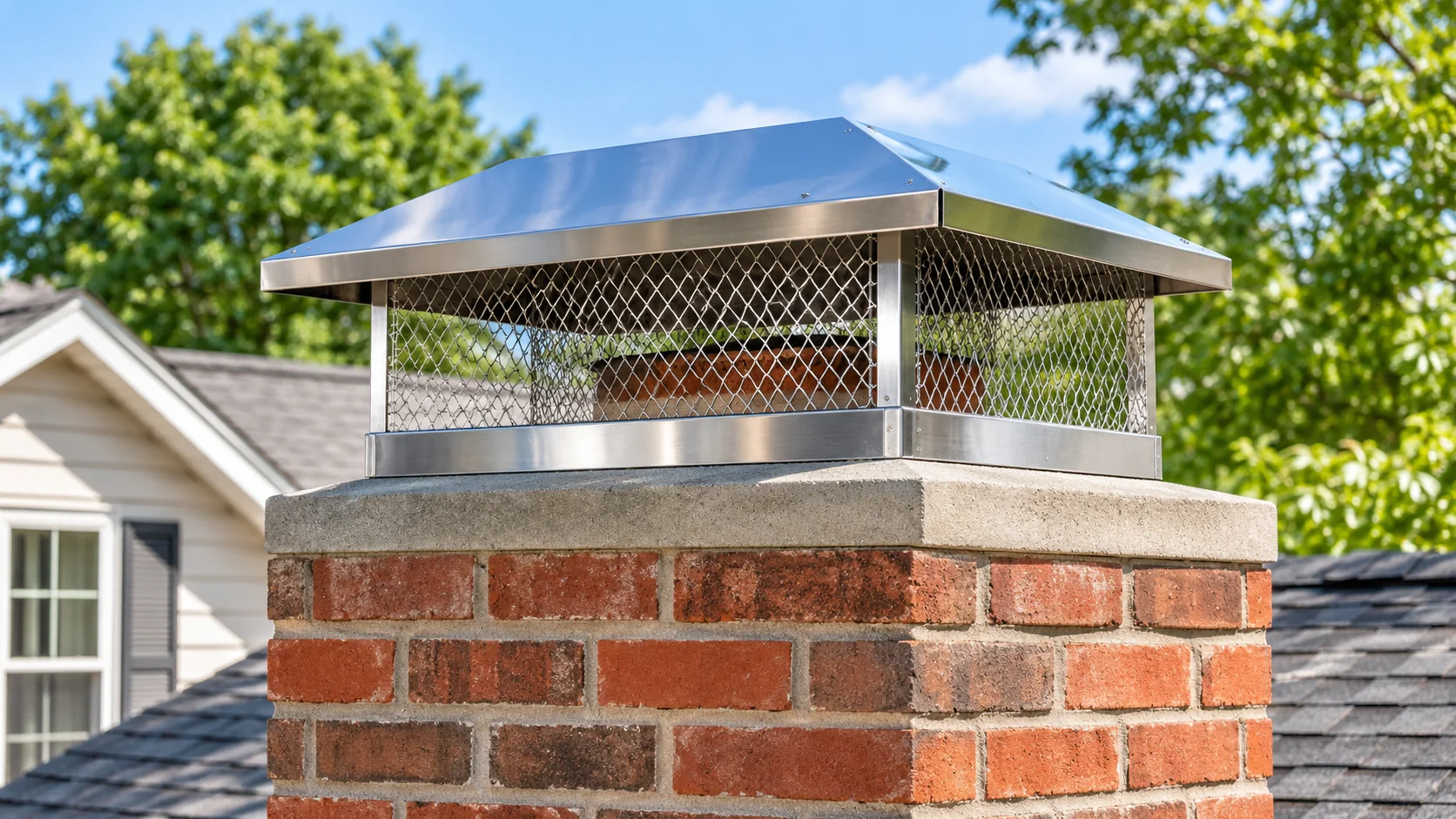
A chimney cap is a metal hood with a mesh screen that sits on top of the flue. It keeps rain, snow, birds, raccoons and leaves out of the chimney and stops sparks from landing on the roof. The best chimney cap is the one that fits your flue exactly, is made from a metal that will outlast the weather where you live, and suits the fuel you burn.
This guide compares every common type of chimney cap, explains which material to choose, and shows real models with their published specs. If you already know your problem, use the finder above to jump straight to the guide built for it.
What Is the Best Chimney Cap for Most Homes?
The best chimney cap for most homes with a brick or block chimney is a 304 stainless steel single flue cap with 3/4 inch mesh. A stainless cap does not rust under normal conditions, works with wood, gas, oil and pellet fuels, and usually carries a lifetime limited warranty from the maker.
The HY-C Shelter stainless cap is a good example of what to look for. Retailer listings show a 24 gauge hood, 18 gauge 3/4 inch expanded mesh and 16 gauge base flanges that bolt to the outside of a clay flue tile. Those three numbers matter more than the brand:
Hood gauge. A lower gauge number means thicker metal. 24 gauge is standard for quality stainless hoods.
Mesh size. 3/4 inch mesh keeps birds and animals out without clogging fast. Smaller mesh catches more sparks but blocks up sooner with creosote.
Base strength. A thick base with bolts holds the cap on in high wind.
If your chimney has more than one flue, a single flue cap will not cover them all. You need a multi flue cap that sits on the crown, like the Draft King BigTop. Read the full guide to multi flue chimney caps before you measure.
The parts of a chimney cap
How Do You Choose a Chimney Cap?
You choose a chimney cap by answering four questions in order. Each one narrows the list.
1. What Kind of Chimney Do You Have?
A masonry chimney is built from brick, block or stone with a clay tile or metal liner inside. Masonry chimneys take a standard single flue or multi flue cap.
A prefab or factory built chimney is a metal pipe, often hidden inside a wood framed box called a chase. These chimneys must use the cap listed for that pipe. See the guide to prefab chimney caps for how to find the right one.
2. How Many Flues Come Out of the Top?
Count the openings. One opening needs a single flue cap. Two or more openings close together need either a cap on each flue or one multi flue cap over the whole crown.
3. What Fuel Do You Burn?
Wood and pellet stoves produce sparks and creosote, so they need a cap with a spark arrestor screen that is easy to clean. Gas appliances run cooler but produce water vapor, so the cap must not restrict the vent. Each fuel has its own guide:
What Is the Best Chimney Cap for a Brick Chimney or Clay Flue?
Most brick chimneys have a clay tile flue sticking up through the crown, and that’s the easiest chimney in the world to cap. A bolt-on single flue cap that clamps around the outside of the tile is the standard fit, which is why the HY-C Shelter and Draft King caps at the top of this list dominate the category. Measure the outside of the tile, not the crown, and buy stainless unless the flue is gas only.
If your brick chimney has two or more flues close together, or a cracked crown you want to protect, a crown mounted multi flue chimney cap is the better buy. A metal chimney is a different case entirely: it needs the cap listed for that brand of pipe, covered in our guide to prefab chimney caps.
Types of Chimney Caps
There are six common types of chimney caps. The types of chimney caps guide covers each in detail, including cowls and top mount dampers.
Single Flue Chimney Caps
A single flue cap covers one flue tile. It attaches with bolts or clamps around the outside of the tile, or with a band that slips inside a round liner. This is the most common cap in the United States because most houses have one fireplace flue.
Multi Flue Chimney Caps
A multi flue cap is a large box with mesh sides that sits on the chimney crown and covers every flue at once. It is fixed to the crown with masonry anchors or adhesive. It works well when flues sit close together, which makes separate caps hard to fit.
Wind Directional and Draft Inducing Caps
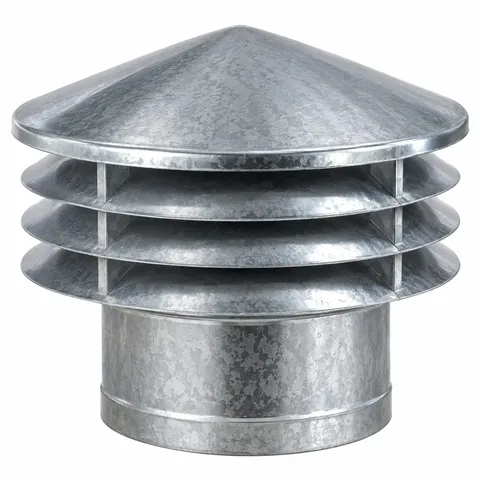
These caps change how air moves across the top of the flue. A rotating wind directional cap turns its back to the wind. A draft inducing cap such as the Vacu-Stack uses a fixed shape that creates suction in any wind direction. Both are used to stop downdrafts.
Spark Arrestor Caps
Any cap with a mesh screen acts as a spark arrestor. Where local code or wildfire rules apply, the mesh size and open area must meet specific limits. The spark arrestor guide explains them.
Chase Covers
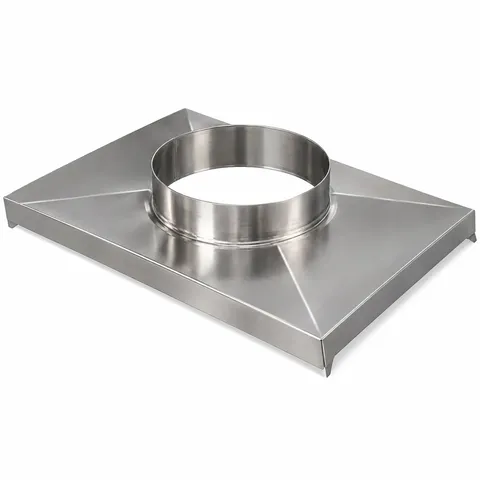
A chase cover is a flat metal sheet that sits on top of a boxed in prefab chimney. It has a collar for the pipe to pass through and a cap on top. See chimney chase covers.
Decorative Caps, Shrouds and Pots
A shroud hides the metal pipe on top of a prefab chimney. A chimney pot extends a masonry flue. Both are mostly about looks. See decorative chimney caps.
Chimney Cap Materials Compared
The metal decides how long a cap lasts and how much it costs. Here is how the four common metals compare.
Material
Lifespan
Cost
Best for
304 stainless steel
Decades; often a lifetime warranty
Mid
Every fuel, most homes
Copper
Decades; develops a green patina
Highest
Premium look, historic homes
Galvanized steel (often black powder coated)
Shortest; rusts once the coating wears
Lowest
Tight budget, gas only, mild climate
Aluminum
Light, does not rust
Low
Gas vents only
HY-C’s own product guide advises against aluminum or black painted galvanized covers when oil, coal, wood or pellets are the main heat source, because the acidic flue gases and heat wear them out fast. Read more in the guides to stainless steel chimney caps, copper chimney caps and galvanized chimney caps.
Chimney Caps for a Fireplace
A chimney cap for a fireplace is usually a single flue stainless cap sized to the clay flue tile above a wood burning fireplace. Fireplace flues are large, often 8 x 13 inches, 13 x 13 inches or 13 x 18 inches outside. Measure before you buy, because a cap that is too small will not slide over the tile and one that is too big will rattle and let animals in.
A wood burning fireplace makes more sparks than a closed stove, so 3/4 inch mesh or smaller is the minimum. Choose a model with a removable hood or hinged lid so the chimney sweep can clean the flue without taking the whole cap off.
Single Flue vs Multi Flue Caps
A single flue cap protects one flue and leaves the crown exposed. A multi flue cap covers the crown as well, which also shields it from rain and freeze damage.
Single flue cap
Multi flue cap
Covers
One flue tile
Every flue and the crown
Mounting
Bolts or clamps to the tile
Anchored to the crown
Best when
One flue, or flues far apart
Two or more flues close together
Price
Lower
Higher; often made to order
How to Size a Chimney Cap
To size a chimney cap, measure the outside length and width of the flue tile and the height it sticks up above the crown. Most single flue caps are sold by flue tile size, such as 9 x 9, 9 x 13 or 13 x 13 inches, and each one fits a small range of real tile sizes. HY-C lists its 18 x 18 inch copper cap, for example, as fitting tiles from 16 1/2 x 16 1/2 inches up to 18 x 18 inches.
A chimney cap costs about $200 to $850 installed, according to HomeGuide, while Angi puts the average around $300. The cap alone ranges from under $100 for a small galvanized cap to several hundred dollars for copper or a custom multi flue cap. The chimney cap cost guide breaks this down by material, size and installer.
Installing and Replacing a Chimney Cap
Most single flue caps are designed for a homeowner to install with a screwdriver or nut driver, as long as you can get on the roof safely. The work itself takes under an hour. Multi flue caps and caps on steep or tall chimneys are usually better left to a chimney sweep, who can also inspect the flue before it is covered.
A cap can clog with creosote, rattle in the wind, catch the wind and cause a downdraft, or let water in if it is the wrong size. Most of these have a simple fix. The chimney cap problems guide covers each symptom, its cause and what to do.
Do You Really Need a Chimney Cap?
You do not strictly need a chimney cap by code in most of the country, but nearly every chimney professional recommends one. Without a cap, rain runs straight down the flue and rusts the damper and firebox, animals nest in the smoke chamber, and leaves block the flue. A cap is one of the cheapest ways to protect a chimney. Read what is a chimney cap for the full answer, including when a cap is required.
Frequently asked questions
What is the best chimney cap?
For most brick chimneys the best chimney cap is a 304 stainless steel cap with 3/4 inch mesh and a lifetime warranty, sized to fit outside the flue tile. Copper is the premium choice and galvanized the budget choice.
Is stainless steel or copper better for a chimney cap?
Stainless steel offers the best mix of lifespan and price for every fuel type. Copper also lasts for decades and develops a patina, but costs several times more. Choose copper for looks, stainless for value.
Do all chimneys need a cap?
Every working chimney benefits from a cap because it keeps rain, animals and debris out of the flue. Codes generally do not require one, but many local rules require a spark arrestor screen, which a cap provides.
How do I know what size chimney cap to buy?
Measure the outside length and width of the flue tile and how far it sticks up above the crown. Buy a single flue cap rated for those outside dimensions, or measure the whole crown for a multi flue cap.
Can I put any chimney cap on a metal chimney?
No. Prefab and Class A metal chimneys need the cap listed for that brand and model of pipe. Using a different cap can affect draft and void the chimney listing.