
The 10 Best Chimney Caps for Gas Fireplaces of 2026
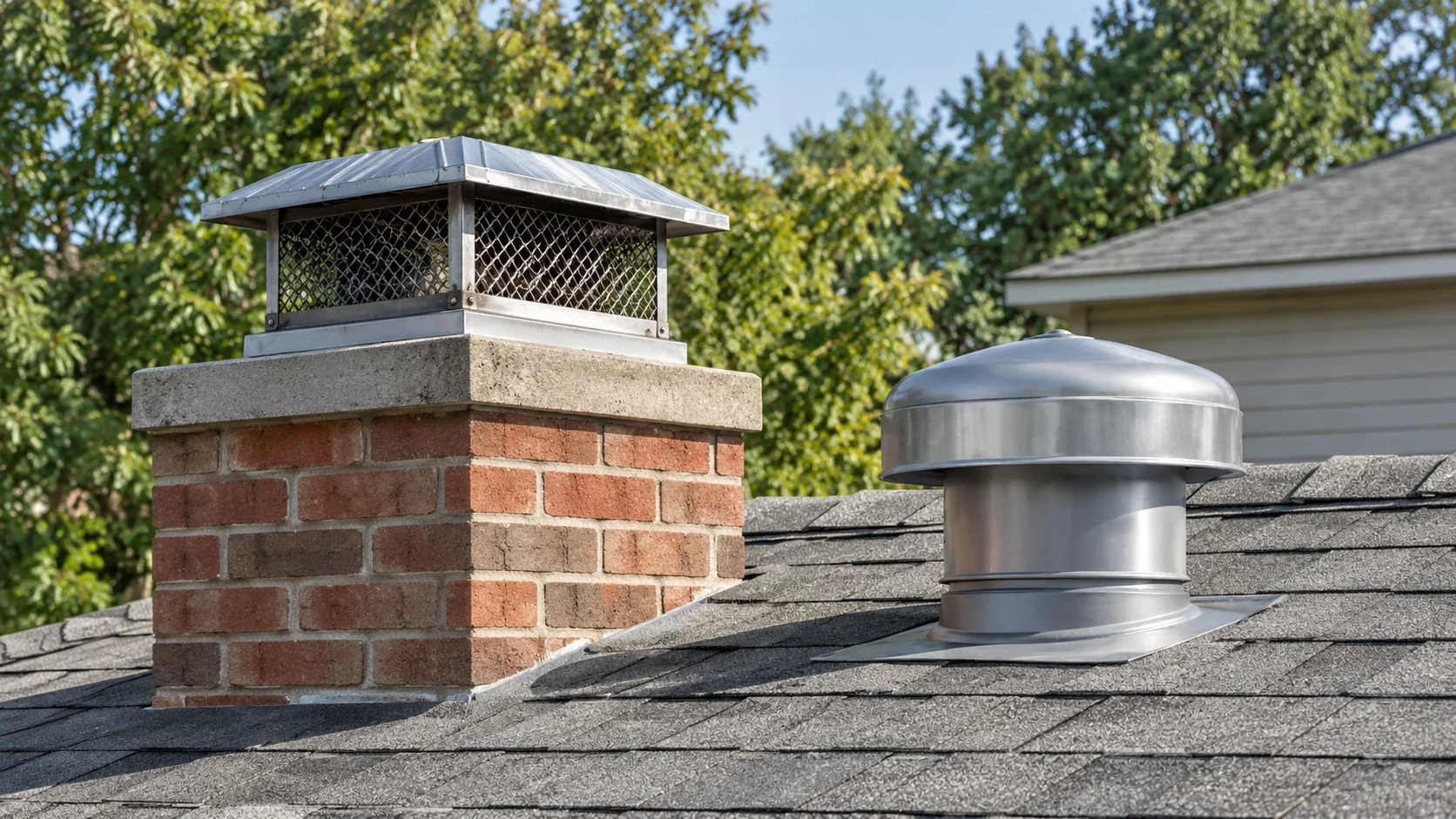
Which chimney cap a gas fireplace needs depends on how it vents: masonry flue, B-vent or direct vent. Caps for gas logs, inserts, furnaces and water heaters, mesh size and code points.
Our top picks
We earn a commission if you buy through our links, at no extra cost to you. Picks are based on published specs and fit rules, not hands-on testing. How we choose.
- Best for B-vent:DuraVent Type B Gas Vent CapCheck price on AmazonJump to review
- Easiest to find:Selkirk RV Round Type B Gas Vent TopCheck price on AmazonJump to review
- Best for high wind:Selkirk RV High Wind Gas Vent TopCheck price on AmazonJump to review
- Best for masonry flues:HY-C Shelter Stainless Steel Single Flue CapCheck price on AmazonJump to review
- Best budget:HY-C Shelter Black Galvanized Single Flue Cap (SC99)Check price on AmazonJump to review
- Best for long tiles:HY-C Draft King CBO918 Black Galvanized CapCheck price on AmazonJump to review
- Best for round flues:Round Black Galvanized Chimney Cap, 3/4 in MeshCheck price on AmazonJump to review
- Best wind cap:FAMCO Wind Directional Chimney Cap (Galvanized)Check price on AmazonJump to review
- Also great:Luxury Metals Wind Directional CapCheck price on AmazonJump to review
- Best for mixed fuel crowns:Draft King Custom BigTop Stainless Multi-Flue CapCheck price on AmazonJump to review
1. Best for B-vent
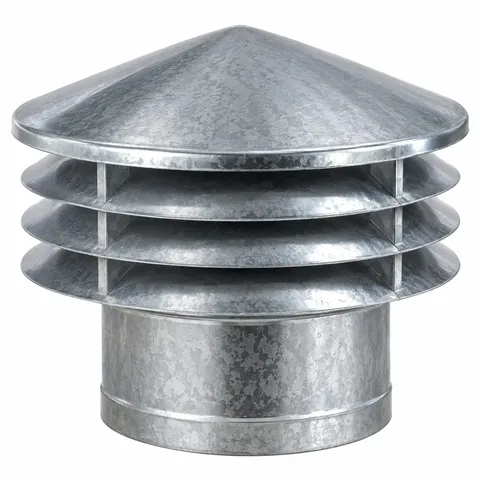
DuraVent Type B Gas Vent Cap
What we like
- Listed for DuraVent B-vent
- Keeps rain and debris out of gas vents
What we don't like
- Gas only, never wood
- Model numbers vary by catalog
For gas fireplaces and appliances that vent through Type B pipe, use the B-vent cap listed for that pipe. This is DuraVent's.
System: DuraVent Type B gas vent | Use: Where B-vent ends above the roof
2. Easiest to find
Selkirk RV Round Type B Gas Vent Top
What we like
- Stocked in many sizes
- Simple round top keeps rain out
What we don't like
- Never for wood burning
- Temperature ratings differ between listings
A common round top for Selkirk Type B gas vent. Easy to find in hardware stores in standard sizes.
Sizes: 3 to 6 in and up | Use: Type B gas vent; not for wood | Max temp: 500 to 550 F (varies by listing)
3. Best for high wind
Selkirk RV High Wind Gas Vent Top
What we like
- Made for high wind locations
- Helps prevent downdraft on gas vents
What we don't like
- Gas vent only
- Limited sizes
A high wind top for Type B gas vents on exposed roofs, designed to keep flue gases flowing in strong wind.
Example: 3 in: 8 in wide, 5 1/2 in high | Use: High wind sites, Type B gas vent
4. Best for masonry flues
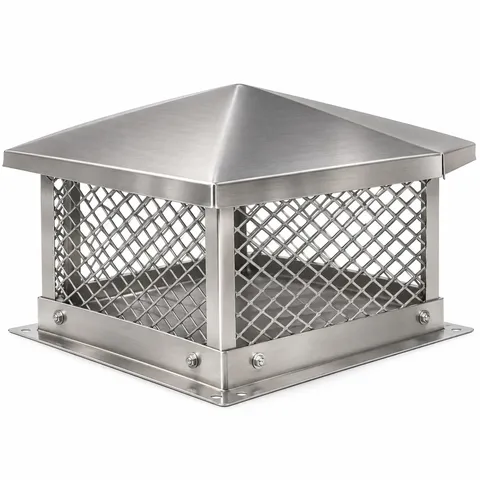
HY-C Shelter Stainless Steel Single Flue Cap
What we like
- Heavy 16 gauge base flanges for a tight grip on the tile
- Stainless hood and mesh for every fuel
- Sold in the common clay tile sizes
- Widely stocked at hardware and farm stores
What we don't like
- 3/4 in mesh is not a spark arrestor under the IRC
- Bolt-on only; a cracked tile needs repair first
This is the cap we would put on most single flue masonry chimneys. The hood is 24 gauge stainless, the mesh is 18 gauge and the base is a heavier 16 gauge, so the part that clamps to the tile is the strongest part. It suits wood, gas and oil, and the common sizes are easy to find. If your local code calls for a spark arrestor, choose a 5/8 in mesh model instead.
Material: Stainless steel | Hood: 24 gauge | Mesh: 18 gauge, 3/4 in | Base: 16 gauge, slotted hex bolts | Sizes: 9 x 9 to 13 x 18 in tiles
5. Best budget
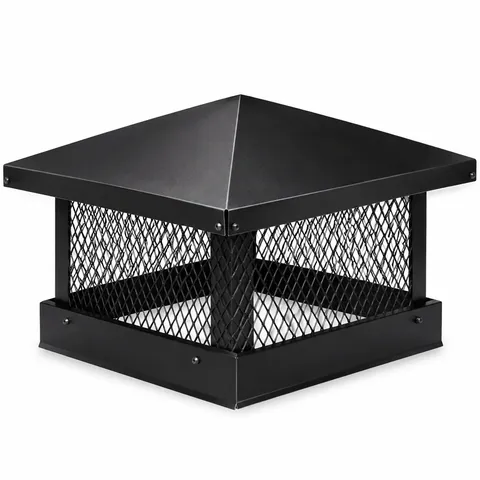
HY-C Shelter Black Galvanized Single Flue Cap (SC99)
What we like
- One of the lowest priced name brand caps
- Light at 4 lb
- Black coat suits dark roofs
What we don't like
- Rusts once the coating wears
- Not for wood, oil or coal as main fuel
The classic budget cap. It does the basic jobs, keeping rain and animals out of a small flue, at a low price. Put it on a gas flue or an unused chimney in a mild climate, not on a busy wood stove.
Material: Galvanized steel, black powder coat | Hood: 24 gauge | Mesh: 3/4 in | Fits: 9 x 9 in tile | Weight: 4 lb
6. Best for long tiles
HY-C Draft King CBO918 Black Galvanized Cap
What we like
- Fits long narrow tiles
- Low cost
- Bolt-on install
What we don't like
- Galvanized life limits
- Narrow size range
Long narrow 9 x 18 in tiles are common on older homes and few stock caps fit them. This Draft King model does, at a budget price, for gas or light use flues.
Material: Black galvanized steel | Fits: 18 x 9 in rectangular tile | Mount: Bolt-on
7. Best for round flues
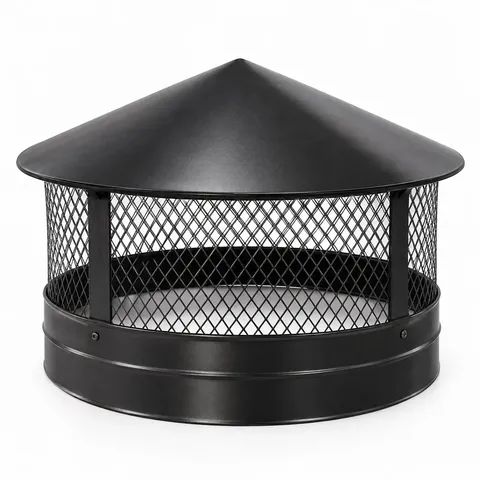
Round Black Galvanized Chimney Cap, 3/4 in Mesh
What we like
- Made to your round flue size
- Black finish
- Lower cost than stainless
What we don't like
- Custom orders take longer
- Galvanized limits
For round clay flues and liners that stock caps do not fit. Order it to your measured size; choose the stainless version for wood burning.
Material: Black galvanized steel | Mesh: 3/4 in | Sizes: Custom
8. Best wind cap
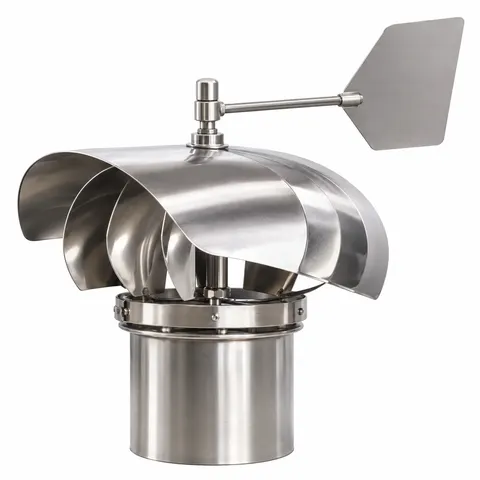
FAMCO Wind Directional Chimney Cap (Galvanized)
What we like
- Lower cost wind cap
- Many sizes
What we don't like
- Galvanized; not for heavy wood use
- Short warranty
The budget version of the FAMCO wind cap, best on gas or light use flues.
Material: 26 gauge galvanized | Sizes: 5 to 14 in, 14 1/2 to 27 in tall | Warranty: 1 year
9. Also great
Luxury Metals Wind Directional Cap
What we like
- Wide size range
- Stainless or budget galvanized
- Option with or without screen
What we don't like
- Rotating parts need care
- Galvanized version not for heavy wood use
A rotating wind cap sold in sizes from 4 to 12 in, in stainless or galvanized, with or without a screen.
Material: Stainless or galvanized | Sizes: 4 to 12 in | Includes: Bolt set
10. Best for mixed fuel crowns
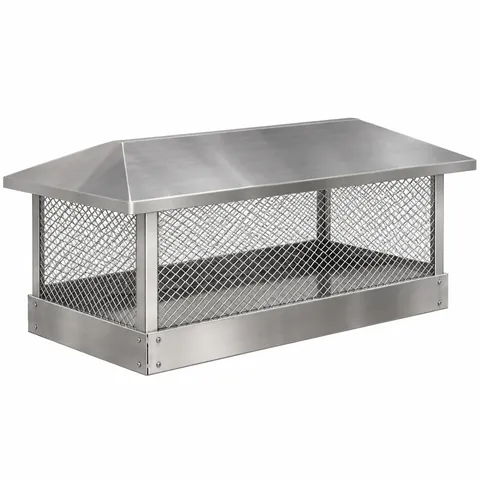
Draft King Custom BigTop Stainless Multi-Flue Cap
What we like
- Made to your crown size
- Lifetime warranty on stainless
- Three mesh heights
What we don't like
- Lead time for custom sizes
- Needs anchoring into the crown
Our pick for chimneys with two or more flues. It is built to your crown measurements in 304 stainless and carries a lifetime warranty, and one cap protects every flue and the crown at once.
Mesh: 18 gauge 304 stainless | Mesh heights: 8, 10 or 14 in | Warranty: Lifetime on stainless | Made in: USA
Key Takeaways
- The right chimney cap for a gas fireplace depends on how it vents. Gas logs and B-vent fireplaces vent up a chimney or B-vent pipe. Direct vent fireplaces use a sealed termination cap that comes with the unit.
- A gas fireplace in a masonry chimney takes a normal single flue cap. Choose mesh that will not ice over or block, and never a cap that restricts the vent.
- B-vent gas appliances such as furnaces and water heaters need the B-vent cap listed for that pipe, like DuraVent Type B caps.
- Direct vent units must use the manufacturer's termination cap. A generic chimney cap on a direct vent system is not allowed.
- Gas burns cooler and cleaner than wood, so galvanized or aluminum caps are acceptable on many gas flues, but stainless still lasts longest.
A gas fireplace looks simple, but the cap it needs depends entirely on how it vents. Some gas fireplaces send exhaust up a regular masonry chimney. Some use a metal B-vent pipe. Many newer units are direct vent, with a sealed pipe that takes in fresh air and pushes exhaust out through a special cap.
Pick the wrong cap and you can block the vent, which can push carbon monoxide back into the home. This guide shows how to identify your venting type and choose the best chimney cap for a gas fireplace, plus caps for gas furnaces and water heaters.
Which Type of Gas Fireplace Do You Have?
Gas Logs or Gas Insert in a Masonry Fireplace
If gas logs sit in an old wood burning fireplace, or a gas insert vents into the masonry chimney, the exhaust goes up the existing flue. This setup uses a standard single flue chimney cap on the flue tile. Many gas inserts are vented through a liner, in which case the cap fits the liner.
B-vent (Natural Vent) Gas Fireplace
A B-vent fireplace draws room air for combustion and sends exhaust up a round double wall Type B gas vent pipe. On the roof you see a round metal cap, usually smaller than a chimney cap. It needs the B-vent cap listed for that pipe.
Direct Vent Gas Fireplace
A direct vent fireplace has a sealed glass front and a co-axial pipe: an inner pipe for exhaust and an outer pipe for fresh air. It ends at a termination cap on a side wall or roof. That cap comes from the fireplace maker and must not be replaced with a generic chimney cap.
Vent Free Gas Logs
Vent free gas logs have no vent at all. If the chimney above them is not used for anything, it still needs a cap to keep rain and animals out, but nothing passes through it.
Chimney Caps for Gas Fireplaces in Masonry Chimneys
A gas fireplace in a masonry chimney uses the same kind of cap as a wood fireplace: a single flue cap sized to the outside of the flue tile, or a multi flue cap over the crown.
Choose Mesh That Will Not Block
Gas produces lots of water vapor and very little soot. In cold weather, that vapor can freeze on very fine mesh. One cap maker’s guidance is that 3/4 inch mesh is a good minimum, because smaller openings can ice up and block the chimney. Most quality caps already use 3/4 inch mesh.
Never Restrict the Vent
The open area under the cap must be large enough for the flue. Model codes based on the IRC require the cap’s open area to be at least four times the flue area. A cap that is too small or bent down can starve the draft. With gas, a blocked flue can cause combustion gases to spill into the room. Every home with a gas appliance should have working carbon monoxide alarms.
Material Choice
Gas is gentler on caps than wood or oil, so a galvanized cap can last longer on a gas flue than on a wood flue. The HY-C Shelter SC99 black galvanized cap is a common budget choice for gas. Stainless still lasts longest and is the safer choice if you might switch back to wood. On a gas-only flue I’d happily use a galvanized chimney cap, but if there’s any chance you’ll switch to wood later, spend the extra on a stainless steel chimney cap.
Chimney Caps for B-vent Gas Fireplaces
Type B gas vent is double wall pipe with an aluminum inner wall and a galvanized steel outer wall. It is used for natural draft gas appliances, including some fireplaces, furnaces, water heaters and boilers.
Use the Listed B-vent Cap
Each B-vent brand makes caps for its pipe. DuraVent, for example, makes Type B gas vent caps such as the 4 inch 4BVDC, which is required where the pipe ends above the roof line, and tee caps in larger sizes. DuraVent’s own catalogs have used both GV and BV prefixes for these parts over the years, so confirm the current part number with the maker or retailer before ordering.
Do Not Use a Masonry Chimney Cap on B-vent?
A masonry cap is designed to bolt to a square or rectangular tile. On round B-vent it will not fit properly and may not be tested for that vent. Always use the B-vent cap.
Termination Caps for Direct Vent Gas Fireplaces
A direct vent fireplace is a sealed system. The termination cap is part of the fireplace’s safety listing. It controls how exhaust leaves and how fresh air enters, and it keeps the two from mixing.
- Use only the manufacturer’s cap or one the manual lists as approved.
- Do not add mesh or a rain cap over a direct vent termination.
- Keep the cap clear of snow, plants and debris.
- Mind the clearances the manual lists from windows, doors and walkways.
If a direct vent cap is damaged, order the replacement from the fireplace maker by model number.
Caps for Gas Furnaces and Water Heaters
Many homes have a furnace or water heater that shares a chimney or vents through its own B-vent.
- Furnace or water heater in a masonry chimney: a single flue cap sized to the tile, or a stainless liner with its own cap if the chimney was relined.
- Furnace or water heater on B-vent: the listed B-vent cap.
- High efficiency (condensing) furnace: these vent through plastic pipe and use their own termination kit, not a chimney cap.
Oil Furnace Flues
Oil burns dirtier than gas and its flue gases are more acidic. An oil furnace flue in a masonry chimney needs a stainless steel cap. HY-C advises against aluminum or black painted galvanized covers when oil is the main fuel, because the acids eat through the coating.
Chimneys with a Gas Flue and a Wood Flue
Many chimneys have a fireplace flue and a separate furnace or water heater flue side by side. You can cap each flue separately or cover both with one multi flue cap. A multi flue cap also keeps rain off the crown. Make sure the cap height leaves plenty of open area for both flues.
Signs a Gas Fireplace Cap Is Not Working
Watch for:
- Soot or yellow flames on a fireplace that used to burn blue.
- Condensation or water on the glass or inside the fireplace.
- A smell of exhaust when the fireplace runs.
- The CO alarm sounding. Leave the house and call the gas company or 911.
- The pilot going out on windy days.
Any of these needs a qualified gas technician or chimney sweep. The cap may be blocked, the wrong size, or the vent may have a separate problem.
How to Size a Gas Fireplace Chimney Cap
- Masonry flue: measure the outside length and width of the tile and how far it sticks up.
- Liner: use the liner diameter.
- B-vent: use the nominal B-vent pipe diameter printed on the pipe.
- Direct vent: order by the fireplace model number.
How Much Does a Gas Fireplace Chimney Cap Cost?
A standard single flue cap for a gas fireplace costs the same as any single flue cap: under $100 for small galvanized models, more for stainless, with most installed jobs between $200 and $850 according to HomeGuide. B-vent caps are usually cheaper than masonry caps. Direct vent termination kits vary by fireplace brand.
Gas Fireplace Chimney Cap Checklist
- Venting type: masonry flue, B-vent or direct vent.
- Cap type: single flue cap, listed B-vent cap or maker’s termination cap.
- Open area: at least four times the flue area under the lid.
- Mesh: 3/4 inch is a common minimum to avoid icing.
- Material: stainless for longest life; galvanized or aluminum acceptable on many gas only flues.
- CO alarms: working alarms on every level and near bedrooms.
Do Gas Fireplaces Need Chimney Caps?
Gas fireplaces that vent through a chimney or B-vent need a cap, for the same reasons as wood fireplaces: to keep out rain, animals and debris. Rain is a particular problem with gas logs, because water rusts the burner, valve and log grate. Animals and nests are dangerous, because a blocked vent can push carbon monoxide into the house.
Direct vent fireplaces already have a termination cap, which must stay in place. Vent free gas logs do not use the chimney, but the chimney above them still needs a cap if it is open.
Can a Chimney Cap Cause Problems with a Gas Fireplace?
A cap can cause problems if:
- It is too small, so it restricts the flue.
- Its mesh clogs with lint, nests or ice.
- It sits too low above the flue.
- It blew off or was damaged, letting debris fall in.
Symptoms include soot on the glass or logs, yellow flames, a pilot that goes out, and condensation inside the fireplace. Turn the fireplace off and have it checked.
Chimney Caps for Gas Water Heaters
A gas water heater often shares the chimney with a furnace, or has its own small flue. Water heaters run often, year round, so a blocked cap is a real risk. Use a cap with plenty of open area, check it each spring and fall, and make sure the water heater’s draft hood is not spilling exhaust. A quick test is to hold a lit match near the draft hood while the burner runs: the flame should be drawn toward the hood, not pushed away.
Abandoned Gas Flues
If you replaced an old furnace or water heater with a high efficiency model that vents through plastic pipe, the old chimney flue may now be unused. It still needs a cap to keep out rain and animals. If a remaining gas appliance still vents into a large old chimney, the flue may be oversized for it, which can cause condensation. Ask a sweep whether the flue needs a liner.
Converting a Wood Fireplace to Gas
When you add gas logs or a gas insert to a former wood fireplace:
- Have the chimney swept to remove creosote.
- Check the existing cap is in good condition with clear mesh.
- Follow the insert maker’s instructions, which often require a liner and its own cap.
- Keep a damper clamp or stop if the gas log instructions require the damper to stay partly open.
Common Gas Fireplace Cap Mistakes
- Using a masonry cap on a B-vent pipe. B-vent needs its own listed cap.
- Replacing a direct vent termination with a generic cap. Direct vent systems must use the maker’s parts.
- Fitting fine spark arrestor mesh where it is not needed. On gas flues it can collect frost and ice.
- Ignoring nests. A quiet gas flue attracts birds and squirrels, and a blocked flue can push carbon monoxide into the home.
- Leaving an abandoned flue open. Unused gas flues still let in rain and animals.
Questions to Ask Before You Buy
- What type of gas fireplace do I have? Masonry chimney, B-vent or direct vent.
- What does the manual say? Many gas appliances list approved caps and terminations.
- Does the chimney also serve a furnace or water heater? That affects flue sizing and cap choice.
- Are there other flues on the crown? Consider a multi flue cap.
- Is a technician servicing the appliance? Ask them to check venting when the cap goes on.
Safety Reminders for Gas Appliances
- Fit carbon monoxide alarms on every level of the home.
- Have gas appliances serviced as the maker recommends.
- Stop using the appliance if you notice soot, condensation on windows, or headaches or nausea in the home.
- If an alarm sounds, leave the house and call 911 or the gas company.
Gas vs Wood Caps at a Glance
| Gas fireplace | Wood fireplace | |
|---|---|---|
| Creosote | No | Yes |
| Water vapor | High | Moderate |
| Recommended mesh | 3/4 inch | 3/4 inch, or spark arrestor where required |
| Galvanized acceptable? | Often, in mild climates | No |
| Listed cap needed? | Yes for B-vent and direct vent | Yes for prefab chimneys |
The Bottom Line
The best chimney cap for a gas fireplace is the one made for how it vents. Gas logs and inserts in a masonry chimney take a stainless single flue cap with 3/4 inch mesh. B-vent fireplaces, furnaces and water heaters take the listed B-vent cap. Direct vent fireplaces use only the manufacturer’s termination cap. Whatever you have, never let the cap restrict the vent, and keep carbon monoxide alarms working.
Frequently asked questions
Do gas fireplaces need chimney caps?
Gas fireplaces that vent up a chimney or B-vent need a cap to keep rain and animals out. Direct vent gas fireplaces come with their own sealed termination cap, which must be used.
What chimney cap is best for a gas fireplace?
For a gas fireplace in a masonry chimney, a stainless single flue cap with 3/4 inch mesh. For B-vent, the listed B-vent cap for that pipe. For direct vent, the manufacturer's termination kit.
Can a chimney cap cause problems with a gas fireplace?
Yes, if it is too small, too low, or has mesh that clogs or ices over. A blocked cap can push combustion gases, including carbon monoxide, back into the house.
Can I use a regular chimney cap on a furnace vent?
No. A furnace or water heater on B-vent needs the B-vent cap listed for that pipe. A masonry chimney serving a furnace uses a cap sized for the flue tile.
What mesh size is best for a gas fireplace chimney cap?
3/4 inch mesh is common. Very fine mesh can block with lint or frost. Check local code, because some areas set their own limits.