
The 10 Best Chimney Chase Covers and Caps of 2026
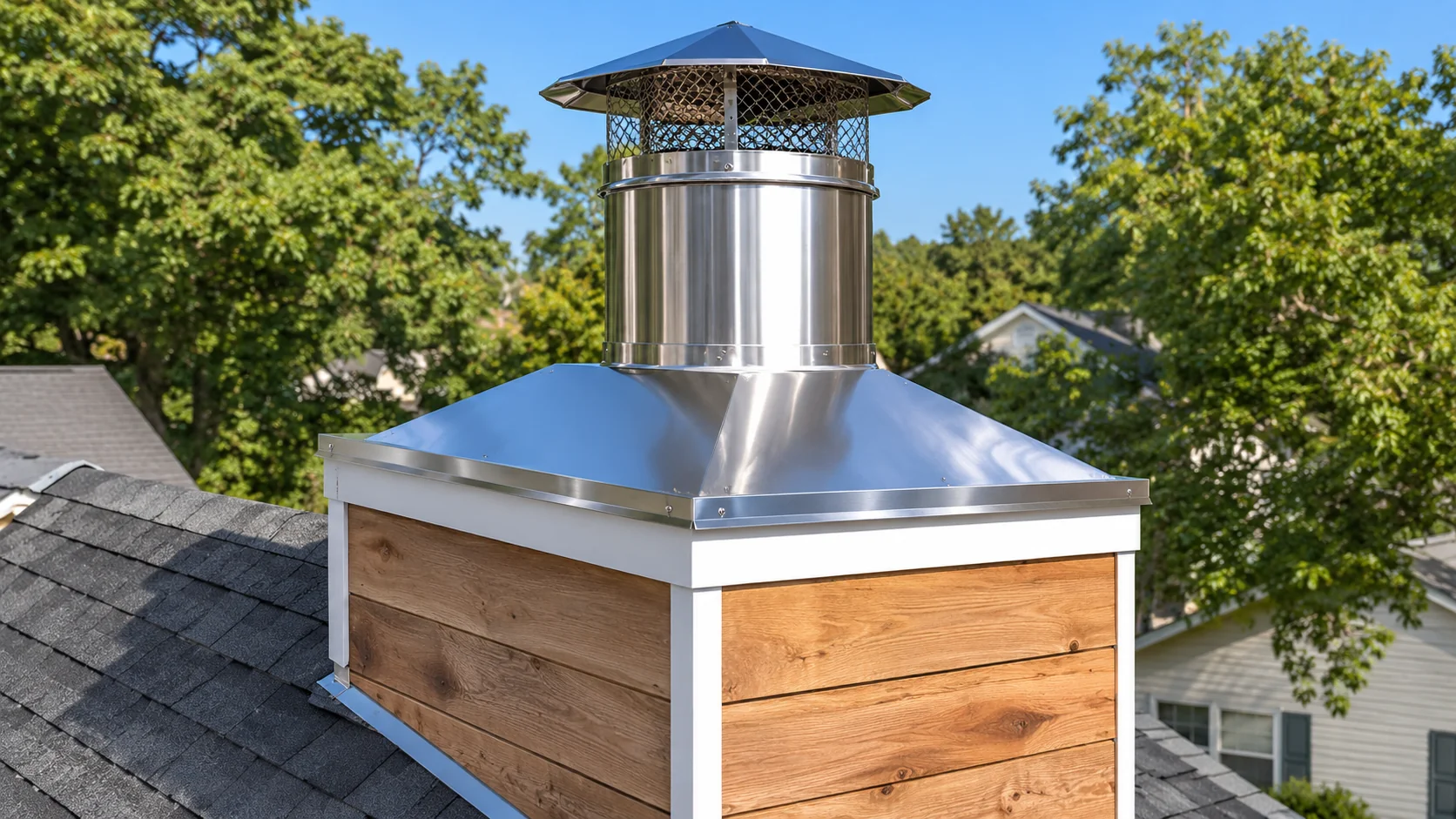
How to choose the best chimney chase cover: stainless vs galvanized, gauge, cross breaks, welded seams, storm collars, measuring, leak signs and replacement cost.
Our top picks
We earn a commission if you buy through our links, at no extra cost to you. Picks are based on published specs and fit rules, not hands-on testing. How we choose.
- Best overall:Rockford Stainless Steel Chase CoverCheck price on AmazonJump to review
- Best made in USA:Woodeze Stainless Steel Chase CoverCheck price on AmazonJump to review
- Best copper option:Chimney Cricket Custom Chase CoverCheck price on AmazonJump to review
- Most finishes:KM Sheet Metal Chimney Chase CoverCheck price on AmazonJump to review
- Best cap for DuraTech:DuraVent DuraTech Chimney CapCheck price on AmazonJump to review
- Best cap for DuraPlus:DuraVent DuraPlus Round Chimney CapCheck price on AmazonJump to review
- Best cap for Selkirk:Selkirk Round Top Chimney Cap (8 in)Check price on AmazonJump to review
- Best shroud:Rockford Custom Chimney ShroudCheck price on AmazonJump to review
- Best listed shroud:Chimney King Decorative ShroudCheck price on AmazonJump to review
- Also great:American Chimney Shroud Old England ShroudCheck price on AmazonJump to review
1. Best overall
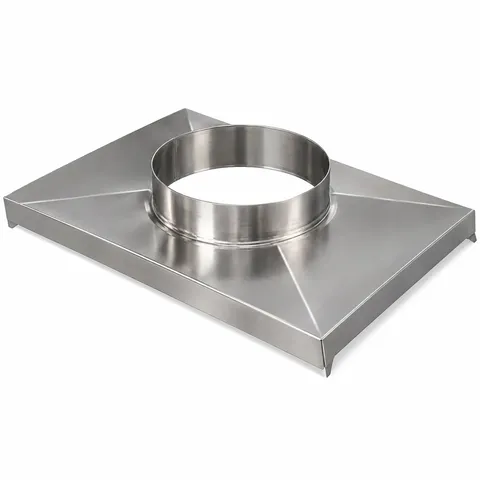
Rockford Stainless Steel Chase Cover
What we like
- Made to your measurements
- Heavier gauge options
- Lifetime rust warranty
What we don't like
- One to two week lead time
- You must measure accurately
Our pick for replacing a rusty chase cover. It is custom made in 304 stainless with welded seams and a lifetime warranty against rust, and you can upgrade to 22 or 20 gauge.
Material: 304 stainless | Gauge: 24 standard, 22 or 20 optional | Seams: Welded | Warranty: Lifetime against rust and defects
2. Best made in USA
Woodeze Stainless Steel Chase Cover
What we like
- Made in the USA
- Proper collar and skirt heights
What we don't like
- Needs measurements within 1/8 in
- Custom wait
A US made stainless chase cover with a 2 in collar and 3 in skirt. The maker asks for measurements within 1/8 in, so measure twice.
Material: Stainless | Collar: 2 in | Skirt: 3 in | Made in: USA
3. Best copper option
Chimney Cricket Custom Chase Cover
What we like
- Copper option for a premium look
- Ordered with or without holes
What we don't like
- Copper is costly
- Custom wait
A custom chase cover in stainless or 20 oz copper, and you can order it with or without flue holes.
Materials: 24 gauge stainless or 20 oz copper | Holes: Optional, with or without
4. Most finishes
KM Sheet Metal Chimney Chase Cover
What we like
- Widest choice of metals and colors
- Custom fabrication
What we don't like
- Specs vary by material
- Custom wait
A fabricator that offers the most metal and color choices, useful when the chase cover needs to match a roof.
Materials: Copper, lead coated copper, stainless, Kynar aluminum, Galvalume
5. Best cap for DuraTech
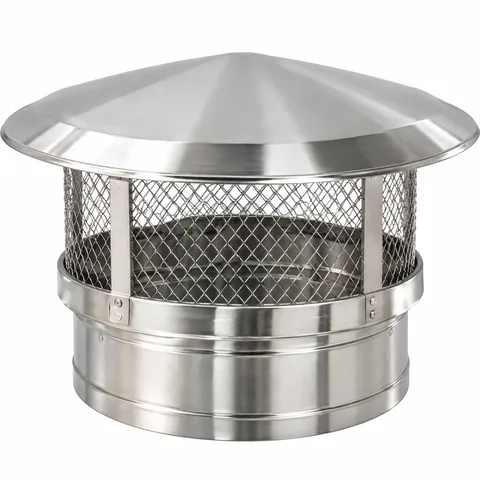
DuraVent DuraTech Chimney Cap
What we like
- The listed cap for DuraTech pipe
- Spark screen options
- Wide size range
What we don't like
- Only for DuraTech pipe
If your wood stove runs through DuraTech pipe, this is the cap to use. Listed caps keep the chimney within its UL listing.
System: DuraTech Class A, UL 103 HT | Sizes: 6 to 16 in | Spark screen: Included on some sizes; add-ons available
6. Best cap for DuraPlus
DuraVent DuraPlus Round Chimney Cap
What we like
- Spark screen removes for cleaning
- Listed for DuraPlus
What we don't like
- Only for DuraPlus pipe
The matching cap for DuraPlus triple wall pipe. The screen comes off with a few screws, which makes creosote cleaning easy.
Material: Stainless | System: DuraPlus triple wall | Spark screen: Included, removable screws
7. Best cap for Selkirk
Selkirk Round Top Chimney Cap (8 in)
What we like
- Wide 16 in hood for an 8 in pipe
- Matched to Selkirk pipe
What we don't like
- Selkirk systems only
The round top cap for Selkirk chimney pipe. Its 16 in hood gives generous rain cover over an 8 in flue.
Fits: 8 in Selkirk chimney pipe | Cap diameter: 16 in | Cap height: 7 in
8. Best shroud
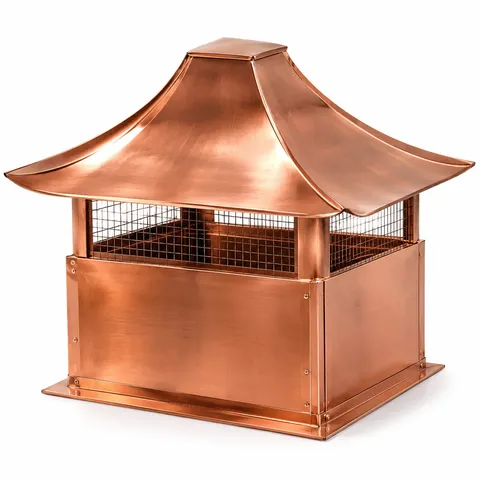
Rockford Custom Chimney Shroud
What we like
- Stainless or copper
- Powder coat colors
What we don't like
- A shroud is not a rain cap; the flue still needs one
A custom shroud in stainless or copper. Remember that the flue still needs its own cap underneath.
Materials: Stainless (powder coat option) or copper | Legs: 4 in
9. Best listed shroud
Chimney King Decorative Shroud
What we like
- Very wide style range
- UL listed models available
What we don't like
- Made to order
- Price varies widely by style
Chimney King sells a huge catalog of shrouds, and listed models matter on factory built chimneys.
Range: 135 styles | Listing: UL listed shroud labels shown
10. Also great
American Chimney Shroud Old England Shroud
What we like
- Huge range of styles and finishes
- Established US maker
What we don't like
- Made to order
- Prefab chimneys need a listed shroud
American Chimney Shroud offers dozens of designs. The Old England style suits traditional homes.
Material: Kynar coated steel (other finishes offered) | Range: 70+ designs in 36 finishes
Key Takeaways
- A chimney chase cover is the metal top on a wood framed chimney box (chase) that surrounds a prefab metal chimney pipe.
- Rusting galvanized chase covers are one of the most common causes of leaks and brown streaks on siding below the chimney.
- The best chase cover is 304 stainless steel, 24 gauge or thicker, with welded seams, cross breaks or a slope to shed water, and a drip edge.
- Chase covers are custom made to your chase size. Measure length, width, hole size and position, collar height and skirt length.
- A chase cover is not a chimney cap. The pipe still needs its listed cap and a storm collar.
If your fireplace has a metal pipe chimney hidden inside a wood framed box on the side or top of the house, that box is called a chase. The flat metal lid on top is the chimney chase cover. When it rusts or leaks, water runs into the chase, rots the framing, and leaves brown streaks down the siding.
This guide explains how chase covers fail, what makes the best one, how to measure for a replacement and what it costs.
What Is a Chimney Chase Cover?
A chimney chase cover is a sheet metal lid that seals the top of a chimney chase. It has:
- A flat or sloped top that sheds water.
- A raised collar around the hole where the chimney pipe passes through.
- A skirt that folds down over the outside of the chase.
- A drip edge that directs water away from the siding.
The prefab chimney pipe passes through the collar and ends above it with its own chimney cap. A storm collar clamps around the pipe just above the chase cover collar and sheds water away from the gap.
Chase Cover vs Chimney Cap
| Chase cover | Chimney cap | |
|---|---|---|
| Sits on | Top of the wood chase | Top of the chimney pipe |
| Job | Keep water out of the chase box | Keep rain, animals and sparks out of the flue |
| Made | Custom to chase size | By the chimney pipe maker |
| Needed on prefab chimneys | Yes | Yes |
The full comparison, including chimney crowns, is in chimney cap vs chimney crown vs chase cover.
Why Chase Covers Fail
Galvanized Steel Rusts
Many builders install galvanized steel chase covers because they are cheap. Once the zinc coating wears off, the steel rusts. Rust holes let water into the chase.
Flat Tops Hold Water
A perfectly flat cover lets water pool, especially around the collar. Standing water speeds rust and finds every pinhole.
Thin Metal Sags
Thin covers sag between supports, creating a dip where water collects.
Failed Sealant
Silicone around the collar and storm collar breaks down in sun and heat. Gaps let water run straight down the pipe into the chase.
Signs of a Failing Chase Cover
- Brown or orange streaks on the siding below the chase.
- Water in the firebox or around the fireplace.
- Musty smell from the fireplace.
- Visible rust or holes on the cover.
- Rotten wood or peeling paint on the chase.
If you see these, replace the cover before the chase framing rots.
What Makes the Best Chimney Chase Cover?
304 Stainless Steel
Stainless steel does not rely on a coating, so it does not rust like galvanized. Rockford fabricates its chase covers from 304 stainless and describes them as rust resistant for life. Copper is another long lasting option with a premium look.
24 Gauge or Thicker
Rockford uses 24 gauge stainless as standard, with 22 and 20 gauge available. Thicker metal resists sagging and denting. Large chases benefit from heavier gauge.
Welded Seams
Welded seams at the collar and corners do not open up the way crimped or sealed seams can. Rockford lists welded seams on its stainless covers.
Cross Breaks or a Slope
Cross breaks are diagonal bends that form a shallow X across the top, so water runs to the edges. A sloped or pitched top does the same. Avoid perfectly flat covers.
Drip Edge
A drip edge kicks water away from the chase siding at the bottom of the skirt.
Correct Collar Height
The collar should rise high enough to keep water from running into the pipe hole. Rockford notes that a standard collar is typically 2 to 3 inches tall.
A Proper Storm Collar
The storm collar clamps around the pipe above the chase cover collar. It should be stainless or match the pipe maker’s spec, and sealed with high temperature silicone.
How to Measure for a Chase Cover
Chase covers are made to order, so measurements must be exact.
Step 1: Measure the Outside of the Chase
Measure the length and width across the outside of the chase framing and siding at the top.
Step 2: Measure the Skirt Length
Decide how far the skirt should fold down the sides, often a few inches, enough to cover the top trim.
Step 3: Measure the Hole
Measure the outside diameter of the chimney pipe where it passes through the cover. The hole is cut to fit the pipe, and the storm collar is sized to the pipe’s outside diameter.
Step 4: Locate the Hole
Measure from two sides of the chase to the center of the pipe. Pipes are rarely centered.
Step 5: Note Extra Holes
Some chases hold more than one pipe. Measure each.
Rockford lists custom sizes up to 120 x 60 inches in 22 and 24 gauge, and 120 x 48 inches in 20 gauge, with larger sizes spliced. Lead time is about 1 to 2 weeks.
Do You Need a New Chimney Cap Too?
If the chimney cap is rusty or the wrong size, replace it at the same time. On a prefab chimney, the cap must match the pipe system. DuraVent DuraTech and DuraPlus pipes, for example, each have their own caps. The new cap has to be one of the prefab chimney caps listed for that pipe, and the same rule applies to any later chimney cap replacement.
Chase Covers and Shrouds
Some homes add a decorative chimney cap or shroud on top of the chase cover to hide the pipe and cap. The shroud must be listed for the chimney system. Rockford notes that a shroud is not a rain cap, so the cap still sits under it.
Installing a Chimney Chase Cover
Chase cover replacement is roof work at height, often on a tall chase. Most homeowners hire a chimney sweep or roofer. The general steps:
- Remove the cap and storm collar from the pipe.
- Remove the old chase cover by pulling the screws or nails along the skirt.
- Inspect the chase for rot and repair framing and sheathing.
- Set the new cover over the pipe and onto the chase.
- Fasten the skirt with stainless screws into the chase sides.
- Fit and seal the storm collar above the cover collar with high temperature silicone.
- Reinstall the chimney cap.
Can You Repair a Rusty Chase Cover?
Small rust spots can be cleaned, primed with a rust inhibiting primer and painted to buy time. Holes, sagging and widespread rust mean the cover should be replaced. Patching a failed galvanized cover usually only delays the leak. Replacing it with stainless solves it.
How Much Does a Chimney Chase Cover Cost?
Chase cover cost depends on size, metal, gauge and installation. Stainless covers cost more than galvanized but last far longer. Large chases, thick gauge and extra holes add cost. Installation is extra if you hire it out, and rotted chase framing adds repair costs. Get a quote using your measurements.
Maintaining a Chase Cover
- Inspect it once a year with the chimney.
- Reseal the storm collar when the silicone cracks.
- Keep debris off the top so water drains.
- Watch the siding for new streaks, an early warning sign.
Chase Cover Checklist
- Material: 304 stainless or copper, not galvanized.
- Gauge: 24 gauge minimum, heavier for large chases.
- Seams: welded.
- Shape: cross breaks or slope, never dead flat.
- Drip edge: on the skirt.
- Collar: about 2 to 3 inches tall.
- Storm collar: stainless, sealed with high temperature silicone.
- Fasteners: stainless screws through the skirt.
- Chase condition: framing and sheathing sound before install.
Galvanized vs Stainless Chase Covers
| Galvanized | Stainless | |
|---|---|---|
| Upfront cost | Lower | Higher |
| Rust | Once the zinc wears away | Not under normal conditions |
| Common failure | Rust holes, streaks on siding | Rare |
| Life | Shorter | Decades |
Most rusted chase covers on homes built in the 1980s to 2000s were galvanized. Replacing with galvanized again restarts the clock. Stainless solves the problem.
Why Brown Streaks Appear on Siding
Brown or orange streaks running down from the top of a chase almost always mean rust from the chase cover. Water collects on the cover, rusts the steel, and carries the rust over the edge. If there is no drip edge, the stained water runs straight down the siding. The streaks are a warning that the cover is failing and water may already be getting into the chase.
Chase Cover Leaks vs Cap Leaks
| Where water appears | Likely source |
|---|---|
| Inside the firebox, on the grate | Chimney cap, storm collar or pipe joint |
| On the ceiling or wall near the chase | Chase cover, flashing or siding |
| Inside the chase framing | Chase cover holes or failed collar seal |
| Only in wind driven rain | Storm collar, cap size, or siding joints |
A chimney sweep can trace the leak by checking each part. Cap specific causes are covered in our guide to a leaking chimney cap.
Can I Install a Chase Cover Myself?
You can if you are comfortable on the roof, have fall protection and can lift the cover safely. Chase tops are often high above the roof line and exposed to wind, so many homeowners hire a pro. The cap and storm collar must be removed and refitted correctly, and the storm collar must be sealed. If the chase framing is rotted, it needs carpentry before the new cover goes on.
How Long Does a Chase Cover Take to Replace?
Once the new custom cover arrives, a straightforward swap usually takes a few hours. Add time for rotted framing, siding repairs or a new chimney cap.
Common Chase Cover Mistakes
- Buying a cover that is too small. Water runs behind the skirt and into the chase.
- Choosing a flat cover. Water pools, rusts the metal and finds the seams.
- Reusing a failed storm collar. Water runs down the pipe.
- Using an unlisted cap. Prefab chimneys need the cap listed for the system.
- Ignoring rust streaks. By the time streaks appear, water may already be rotting the framing.
Questions to Ask Before You Buy
- What are the exact outside dimensions of the chase?
- Where is the flue hole, and what size is it?
- What is the chimney brand and model?
- Is the framing under the old cover sound?
- Do I want a shroud as well?
Chase Cover Upgrade Options
| Upgrade | Benefit |
|---|---|
| Stainless instead of galvanized | Much longer life, no rust streaks |
| Cross break or raised center | Water runs off instead of pooling |
| Drip edge on the skirt | Water drips clear of the siding |
| Raised collar at the flue hole | Water cannot run straight into the chase |
| New storm collar and seal | Stops water running down the pipe |
Signs of Hidden Water Damage in a Chase
- Soft or rotten wood at the top of the chase.
- Water stains around the fireplace surround.
- Mold or musty smells near the fireplace.
- Rust on the firebox or damper.
If you see these, have a sweep or contractor check the chase framing before fitting the new cover.
Quick Verdict by Situation
| Situation | What to choose |
|---|---|
| Rusty galvanized cover | Stainless replacement with cross break |
| Water pooling on top | Sloped or raised center cover |
| Water running down the pipe | New storm collar and seal |
| Rust streaks on siding | Replace cover, check framing |
| Want a finished look | Listed shroud over a new cover |
How to Tell a Good Chase Cover from a Poor One
A good cover is made from heavy stainless, has a slope or cross break, a raised collar around the flue hole and a skirt with a drip edge. A poor one is thin, flat, galvanized and cut close to the chase with no drip edge. The difference in price is usually small compared with the cost of repairing rotten chase framing later.
The Bottom Line
The best chimney chase cover is custom made from 304 stainless steel, 24 gauge or thicker, with welded seams, cross breaks or a slope, a drip edge and a tall collar. Pair it with a sealed storm collar and the cap listed for your chimney pipe. Replace a rusty galvanized cover before water rots the chase.
Frequently asked questions
What is a chimney chase cover?
A metal sheet that covers the top of a chimney chase, with a raised collar where the prefab chimney pipe passes through. It keeps water out of the chase.
Chimney cap vs chase cover: what is the difference?
A chase cover seals the top of the chase box. A chimney cap sits on the flue pipe to keep rain, animals and sparks out of the flue. Prefab chimneys need both.
Why is my chase cover rusting?
Most builder grade chase covers are galvanized steel. Water pools on flat covers, the zinc wears away and the steel rusts, often leaving brown streaks on the siding.
How long does a stainless steel chase cover last?
Stainless chase covers are made to last for decades, and makers often describe them as rust resistant for life. Galvanized covers fail much sooner.
How much does a chimney chase cover cost?
It depends on size, metal and gauge. Custom stainless covers cost more than galvanized but rarely need replacing. Get a quote with your measurements.