
What Is a Chimney Cap and Do You Need One?
Key Takeaways
- A chimney cap is a metal cover with a solid lid and mesh sides that fits over the top of a chimney flue.
- It keeps out rain, snow, animals and debris, stops sparks reaching the roof, and helps block wind from blowing down the flue.
- Most model codes do not require a cap on every chimney, but they set rules for spark arrestors and caps where they are used, and factory built chimneys must use their listed cap.
- Without a cap, water rusts the damper and firebox, animals nest in the flue, and leaves can block it.
- Every working chimney benefits from a cap. Unused chimneys need one too, to keep water and animals out.
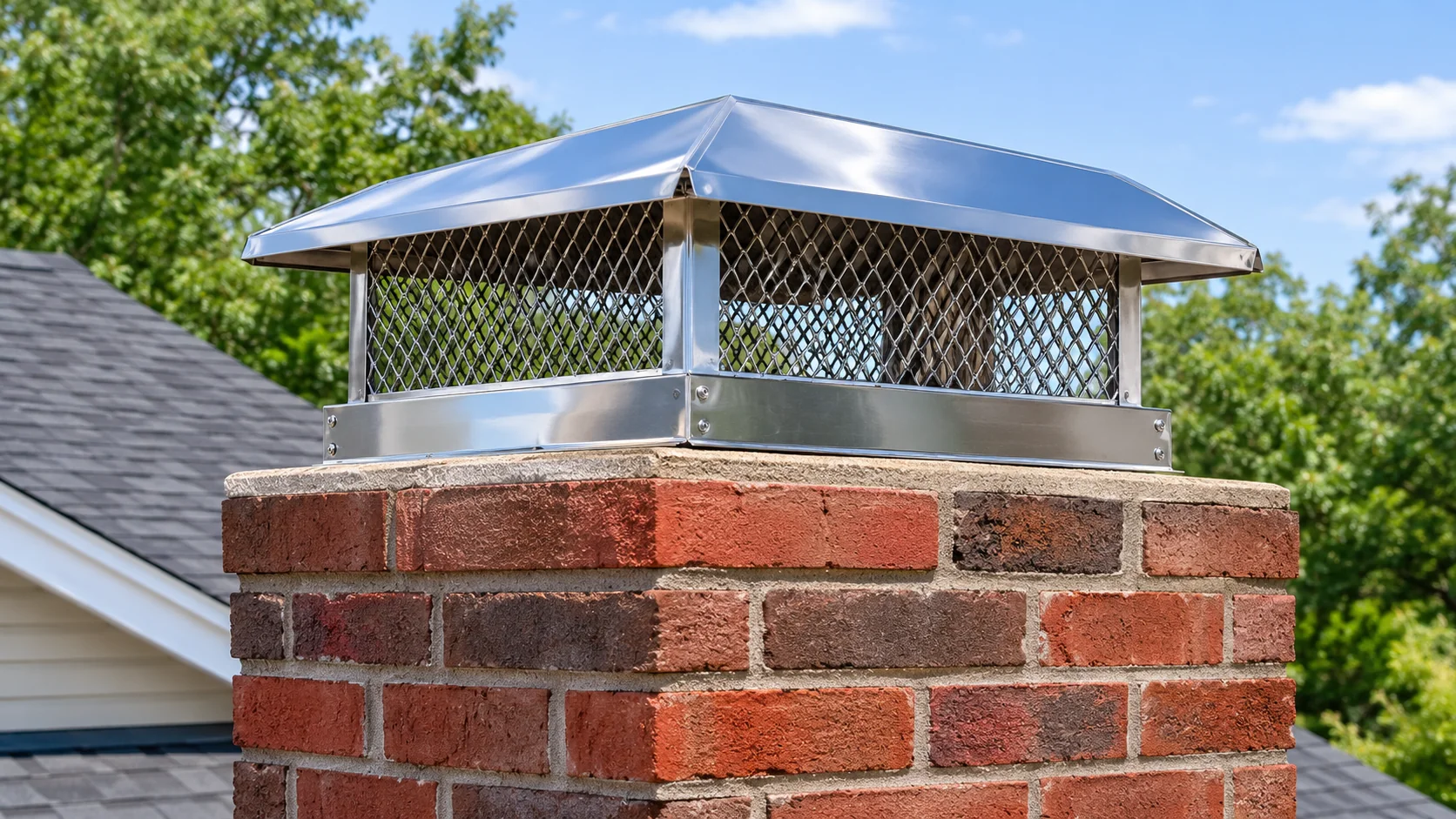
A chimney cap is a metal cover that sits on top of a chimney flue. It has a solid lid to keep rain out and mesh sides to keep animals out while letting smoke escape. It is one of the smallest parts of a chimney and one of the most important.
This guide explains what a chimney cap is, what it does, how it works, what the codes say, and what happens when a chimney has no cap at all. If you already know you need one, the best chimney cap guide will help you pick the right type.
What Is a Chimney Cap?
A chimney cap is a protective cover fitted to the top of a chimney flue. In its most common form it has three parts:
- A lid or hood. A solid metal top that sits a few inches above the flue opening and sheds rain and snow.
- A mesh screen. Metal mesh around the sides between the base and the lid. Smoke passes through; animals, debris and most sparks do not.
- A base or mounting. Flanges, bolts, a band or anchors that hold the cap to the flue tile, liner, pipe or crown.
Caps are made from stainless steel, copper, galvanized steel and sometimes aluminum. They come in square, rectangular, round and oval shapes to fit different flues, and in single flue and multi flue versions.
Chimney Cap vs Chimney Crown
People often mix up the cap and the crown. The crown is the concrete or mortar slab that covers the top of a masonry chimney around the flue tiles. It is part of the masonry. The cap is the metal cover on top of the flue. A chimney needs both: the crown seals the masonry, and the cap protects the flue. The full comparison is in the guide to chimney cap vs chimney crown.
Chimney Cap vs Chase Cover
On a factory built chimney inside a wood framed chase, the flat metal top of the chase is the chase cover. The cap sits on the chimney pipe above it. Again, you need both.
What Does a Chimney Cap Do?
A chimney cap does five jobs.
1. Keeps Rain and Snow Out
The lid stops rain and snow falling straight down the flue. Water in a chimney rusts dampers and metal fireboxes, soaks into brick and mortar, cracks clay tiles when it freezes, and mixes with creosote to make a smelly, acidic sludge. A cap keeps the flue dry.
2. Keeps Animals Out
Birds, raccoons, squirrels and bats all use open chimneys. Nests block the flue and can catch fire. Animals can fall into the firebox or die in the smoke chamber. The mesh on a cap closes the opening.
3. Keeps Debris Out
Leaves, twigs and pine needles blow into open flues and pile up on the damper or smoke shelf. Dry debris is a fire hazard. Wet debris holds moisture against the masonry.
4. Catches Sparks
Burning embers can rise up the chimney and land on the roof, in gutters or on dry plants. The mesh on a cap acts as a spark arrestor, catching most embers before they leave. In wildfire areas this is often required.
5. Reduces Wind Downdraft
Wind blowing across or down onto an open flue can push smoke back into the house. A lid deflects some of that wind. Specialty wind directional and draft inducing caps do this even better.
How Does a Chimney Cap Work?
A chimney works because hot gases are lighter than cold air. When a fire burns, the hot smoke rises up the flue and out of the top, pulling fresh air into the fire behind it. This is called draft.
A chimney cap lets that process continue while protecting the opening:
- The lid sits high enough above the flue that smoke can turn and flow out through the mesh on all sides.
- The open area through the mesh must be large enough not to slow the smoke. Model codes based on the IRC require the open area of a cap to be at least four times the flue area.
- Rain falling on the lid runs off the edges, outside the flue.
- Wind hitting the lid is deflected instead of blowing straight down.
A cap that is too small, too low or clogged reduces the open area and slows the draft. That is why fit and maintenance matter.
Do You Need a Chimney Cap?
If your chimney is open at the top, you almost certainly need a chimney cap. Chimney sweeps and the Chimney Safety Institute of America routinely recommend caps for every chimney. A cap costs far less than the damage it prevents.
When a Cap Is Most Important
- You burn wood. Sparks, creosote and frequent use make a cap with a spark screen essential.
- You live where it rains or snows a lot. Water damage is the most common chimney problem.
- There are trees near the house. Leaves and animals are more likely.
- You live in a wildfire area. A spark arrestor may be required.
- The chimney is unused. An empty flue is an easy home for animals and a funnel for rain.
When You May Not Need a Separate Cap
- Direct vent gas fireplaces already have a termination cap from the maker, which must be used.
- High efficiency furnaces and water heaters that vent through plastic pipe have their own vent terminations.
- Chimneys sealed permanently at the top by a mason, with a proper cap stone or top seal, may not need a mesh cap. Ask a sweep before sealing, so moisture can still escape.
Are Chimney Caps Necessary?
Chimney caps are not always required by law, but they are necessary for a healthy chimney. Think of it like gutters: a house can stand without them, but water damage follows. A cap is one of the few chimney parts that prevents problems instead of fixing them.
The cost comparison makes the point. A cap typically costs a few hundred dollars installed. Replacing a rusted damper, rebuilding a cracked crown or relining a damaged flue costs much more. Removing animals and nests, and cleaning up after them, also costs more than a cap.
Are Chimney Caps Required by Code?
The answer depends on the type of chimney and where you live.
Masonry Chimneys
The International Residential Code, which most states adopt in some form, does not generally require a cap on every masonry chimney. It does set rules that apply when a cap or spark arrestor is used or required:
- Spark arrestors must have a net free area at least four times the flue area, be made of heat and corrosion resistant material, and have openings that stop a 1/2 inch sphere but pass a 3/8 inch sphere. Code summaries note this applies where a spark arrestor is installed or required by the local authority.
- Rain caps on masonry chimneys must also provide an open area at least four times the flue area.
Code section numbers vary between editions and state versions, so check the version your area uses.
Local Fire Codes and Wildfire Areas
Many local codes require spark arrestors on wood burning chimneys, especially in wildfire prone areas. California is commonly cited as requiring 5/8 inch or smaller mesh. Your local building or fire department can tell you what applies.
Factory Built Chimneys
Factory built chimneys and fireplaces are tested and listed as a system, including the cap. Installation codes require them to be installed according to that listing, so the listed cap is effectively required.
NFPA 211
NFPA 211, the national standard for chimneys, fireplaces and vents, is widely used by inspectors and sweeps. It calls for chimneys to be inspected every year and cleaned as needed. A missing or damaged cap is a common finding in those inspections.
What Happens If You Don’t Have a Chimney Cap?
A chimney without a cap is open to the weather and wildlife. Over time, that leads to predictable problems.
Water Damage
- Rusted damper that sticks open or will not seal.
- Rusted firebox in metal prefab fireplaces.
- Cracked flue tiles as water freezes and expands.
- Spalling brick and mortar inside the chimney.
- Stained ceilings and walls next to the chimney.
- Musty odors, especially in humid weather, from wet creosote and soot.
Animal Problems
- Nests that block the flue and can catch fire.
- Animals trapped in the smoke chamber or firebox.
- Droppings and parasites in the chimney.
- Odors from dead animals.
Debris and Blockages
- Leaves and twigs that pile up on the smoke shelf.
- Blocked flues that push smoke and carbon monoxide into the house.
Fire Risk
- Sparks and embers landing on the roof, in gutters or on plants.
- Nests and debris in the flue igniting from a fire below.
Draft Problems
- Wind downdraft pushing smoke into the room.
- Rain cooling the flue and slowing draft.
Does Every Chimney Need a Cap?
Every chimney that is open at the top benefits from a cap. That includes:
- Wood burning fireplace chimneys.
- Wood and pellet stove chimneys.
- Gas fireplace chimneys that vent up a flue.
- Oil and gas furnace and water heater flues.
- Unused and abandoned flues.
The type of cap changes with the chimney. A masonry fireplace takes a single flue or multi flue cap. A metal chimney takes its listed cap. A B-vent takes a B-vent cap. A direct vent fireplace keeps its own termination.
Do Unused Chimneys Need Caps?
Yes. An unused chimney still collects rain and still attracts animals. In some ways it is more vulnerable, because no one notices problems until they show up as leaks or smells. If you never plan to use the chimney, ask a sweep about a cap designed for unused flues, or a top sealing damper that closes the flue but can be opened later. Make sure any gas appliances are not still venting into it.
Can You Put a Chimney Cap on a Chimney with No Flue Liner?
You can fit a cap to the top of an unlined masonry chimney, but a cap does not make an unlined chimney safe to use. Many older chimneys were built without clay tile liners, or the liners have cracked and fallen apart. Heat and gases from a fire can pass through the masonry to wood framing.
If your chimney has no liner:
- Do not use the fireplace or stove until it has been inspected.
- Have a chimney sweep check the flue with a camera.
- If it needs a liner, the liner kit will usually include a top plate and cap.
- If you will never use it, a cap or top seal keeps rain and animals out.
Types of Chimney Caps at a Glance
| Type | What it fits | Main job |
|---|---|---|
| Single flue cap | One flue tile or liner | Rain, animals, sparks |
| Multi flue cap | Whole crown with several flues | Covers all flues and the crown |
| Wind directional or draft inducing cap | Flues with downdraft | Stops wind blowing down |
| Spark arrestor cap | Wood burning flues | Catches embers |
| Chase cover with cap | Prefab chimneys in a chase | Seals the chase and flue |
| Decorative cap, shroud or pot | Visible chimneys | Looks plus protection |
The types of chimney caps guide covers each one in detail.
What Are Chimney Caps Made of?
- Stainless steel: the most common quality material. Resists rust, suits every fuel, often comes with a lifetime limited warranty.
- Copper: premium, long lasting, ages to a patina.
- Galvanized steel: cheapest, often powder coated black, rusts once the coating wears.
- Aluminum: light, used mainly on gas vents.
HY-C’s product guide advises against aluminum or black painted galvanized caps when wood, oil, coal or pellets are the main fuel. Read more in the best chimney cap guide.
How Long Does a Chimney Cap Last?
A stainless or copper cap can last for decades if it fits well and is kept clean. Galvanized caps last much less, especially on wood or oil flues. Caps fail early when they are the wrong size, rattle loose in wind, or clog repeatedly with creosote. Rust holes, torn mesh or a loose lid all mean it’s time for a chimney cap replacement.
How Much Does a Chimney Cap Cost?
HomeGuide puts the typical cost of a chimney cap with installation between about $200 and $850, while Angi gives an average of around $300. The cap alone can cost under $100 for small galvanized models or several hundred dollars for copper or custom multi flue caps. The full breakdown is in chimney cap cost.
Can You Install a Chimney Cap Yourself?
Many single flue caps are designed for homeowners to install with basic tools, if you can reach the chimney safely. Multi flue caps, caps on steep or tall roofs, and any job where the chimney needs inspection first are better left to a professional. The step by step guide is how to install a chimney cap.
How to Tell If Your Chimney Has a Cap
From the ground, look at the top of the chimney:
- A box or round metal cover with a lid sitting above the flue means there is a cap.
- Open clay tiles sticking up from the crown mean there is no cap.
- A round metal pipe ending in a cone or rounded top is usually the cap on a prefab chimney.
Binoculars help. You can also look up the flue from the fireplace with a flashlight, with the damper open and the fireplace cold. If you see sky with no mesh, there is no cap.
Signs Your Chimney Cap Needs Attention
- Rust, holes or missing mesh.
- The cap is leaning or loose.
- Smoke spills into the room more than it used to.
- Water in the firebox after rain.
- Animal noises or nesting material in the fireplace.
The chimney cap problems guide explains each symptom and the fix.
Parts of a Chimney Cap
Most chimney caps share the same basic parts:
| Part | What it does |
|---|---|
| Lid or hood | Sheds rain and snow away from the flue |
| Mesh or screen | Keeps animals and debris out, and on spark arrestors keeps embers in |
| Frame | Holds the lid above the mesh |
| Base, legs or skirt | Fits around the flue tile or onto the crown |
| Fasteners or band | Holds the cap in place |
Some caps add extras such as a damper plate, rotating head, or decorative trim.
Chimney Cap Myths
“A Cap Blocks Smoke”
A properly sized cap leaves plenty of open area. Model codes require spark arrestors to have at least four times the flue area. Smoke problems usually come from the wrong size, clogging or other causes.
“Gas Fireplaces Don’t Need Caps”
Gas fireplaces with masonry flues still let in rain and animals. Many gas appliances also have listed vent caps that must be fitted.
“Any Cap Fits Any Chimney”
Caps are sized to the flue or crown. Prefab chimneys need the listed cap for that system.
“Caps Last Forever”
Stainless and copper caps last for decades, but galvanized caps wear out much sooner. All caps need inspection.
“A Cap Fixes a Leaking Chimney”
A cap stops rain coming down the flue, but many leaks come from the crown, flashing or brick.
Who Installs Chimney Caps?
- Chimney sweeps are the most common installers and can inspect the flue at the same time.
- Masons handle caps alongside crown or brick repairs.
- Roofers may fit caps during roof work.
- Homeowners can fit simple single flue caps on safe roofs.
Choose an installer who will measure the flue, inspect the chimney and explain why a particular cap suits your home.
A Chimney Cap in One Sentence
A chimney cap is a metal hood with mesh sides that sits on top of the flue to keep rain, animals and debris out, catch sparks, and protect the chimney from damage.
Where to Go Next
If you already know you want a cap, the next steps are:
- Work out your chimney type, masonry or prefab.
- Measure the flue or check the listed cap for your prefab system.
- Choose the material that suits your fuel and climate.
- Pick the type that solves any special problem you have.
- Decide on DIY or professional installation based on your roof and comfort level.
Each of these steps is covered in detail in the guides on this site.
The Bottom Line
A chimney cap is a metal lid and mesh screen that protects the top of the flue. It keeps out rain, animals and debris, catches sparks and helps stop downdrafts. Codes do not always require one, but nearly every chimney needs one, including unused chimneys. For the cost of a few hundred dollars, it prevents damage that costs far more to fix.
Frequently asked questions
What is a chimney cap?
A chimney cap is a metal cover with a solid lid and mesh sides that sits on top of a chimney flue to keep out rain, animals and debris and to catch sparks.
What does a chimney cap do?
It keeps rain and snow out of the flue, keeps birds and animals from nesting, stops leaves and debris, catches sparks and embers, and reduces wind blowing down the chimney.
Do I need a chimney cap?
If your chimney is open at the top, yes. A cap is one of the cheapest ways to prevent water damage, animal problems and roof fires.
Are chimney caps required by code?
Model codes generally do not require a cap on every masonry chimney, but they set requirements for spark arrestors where required and caps where installed. Many local fire codes require spark arrestors, and factory built chimneys must use their listed cap.
What happens if you do not have a chimney cap?
Rain enters the flue and causes rust, mortar damage and odors. Animals can nest and block the flue. Leaves collect. Sparks can land on the roof.
Does every chimney need a cap?
Every chimney that is open at the top benefits from one, including unused chimneys. Direct vent gas appliances use their own termination cap instead.