
The 10 Best Chimney Caps to Keep Animals Out of 2026
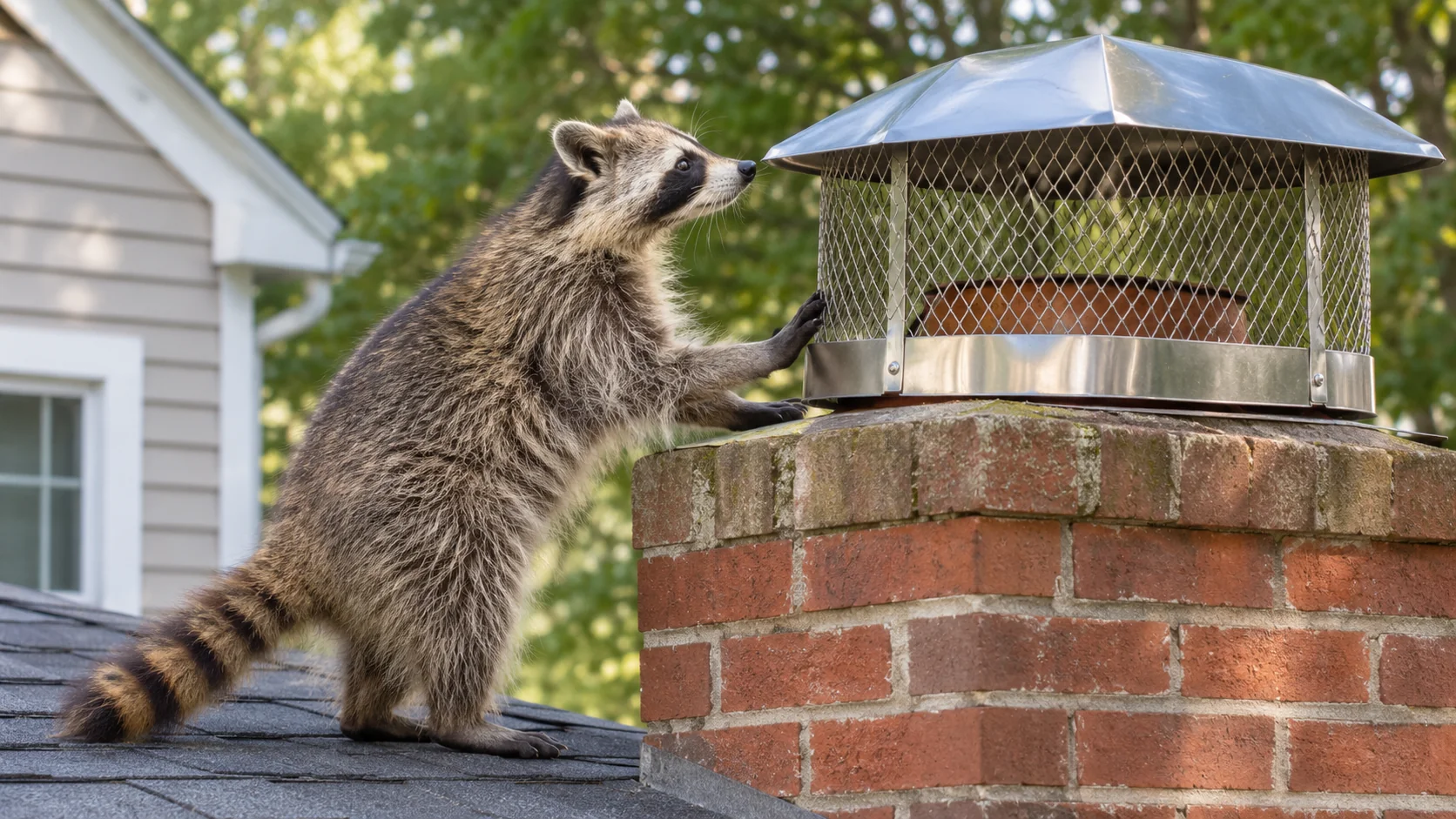
The best chimney cap animal guard has strong mesh, no gaps and a secure base. Which caps keep out birds, raccoons, squirrels and bats, and how to cap a chimney with animals already inside.
Our top picks
We earn a commission if you buy through our links, at no extra cost to you. Picks are based on published specs and fit rules, not hands-on testing. How we choose.
- Best overall:HY-C Shelter Stainless Steel Single Flue CapCheck price on AmazonJump to review
- Best against raccoons:HY-C Shelter Pro Single Flue CapCheck price on AmazonJump to review
- Best for several flues:Draft King Custom BigTop Stainless Multi-Flue CapCheck price on AmazonJump to review
- Best large crown:The Forever Cap Multi-Flue Crown Mount CapCheck price on AmazonJump to review
- Best against bats and embers:HY-C U1313S58 Stainless Universal Cap, 5/8 in MeshCheck price on AmazonJump to review
- Best for big tiles:Draft King SS1515U Stainless Single Flue CapCheck price on AmazonJump to review
- Best budget:HY-C Shelter Black Galvanized Single Flue Cap (SC99)Check price on AmazonJump to review
- Best budget fine mesh:HY-C CBC1313 Black Galvanized Cap, 5/8 in MeshCheck price on AmazonJump to review
- Best for round flues:Round Stainless Steel Chimney Cap, 3/4 in MeshCheck price on AmazonJump to review
- Best round screen:Round Galvanized Spark Arrestor and Animal Screen (10 in)Check price on AmazonJump to review
1. Best overall
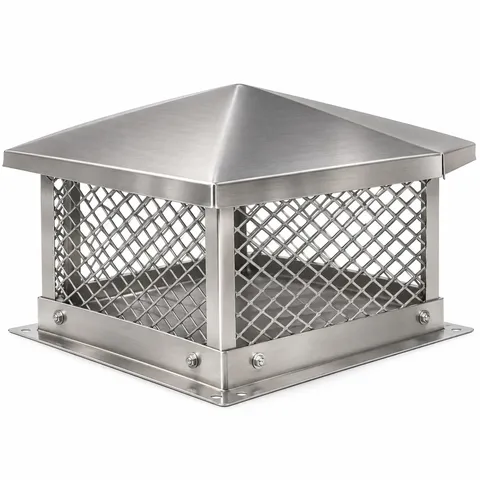
HY-C Shelter Stainless Steel Single Flue Cap
What we like
- Heavy 16 gauge base flanges for a tight grip on the tile
- Stainless hood and mesh for every fuel
- Sold in the common clay tile sizes
- Widely stocked at hardware and farm stores
What we don't like
- 3/4 in mesh is not a spark arrestor under the IRC
- Bolt-on only; a cracked tile needs repair first
This is the cap we would put on most single flue masonry chimneys. The hood is 24 gauge stainless, the mesh is 18 gauge and the base is a heavier 16 gauge, so the part that clamps to the tile is the strongest part. It suits wood, gas and oil, and the common sizes are easy to find. If your local code calls for a spark arrestor, choose a 5/8 in mesh model instead.
Material: Stainless steel | Hood: 24 gauge | Mesh: 18 gauge, 3/4 in | Base: 16 gauge, slotted hex bolts | Sizes: 9 x 9 to 13 x 18 in tiles
2. Best against raccoons
HY-C Shelter Pro Single Flue Cap
What we like
- Locking band holds better than corner bolts alone
- Smaller lid fits flues that sit close together
- 304 stainless throughout
What we don't like
- Smaller lid gives less rain overhang
- Fewer retail outlets than the standard Shelter
The Shelter Pro swaps loose corner brackets for a 2 1/4 in locking band, which is the better choice on windy roofs or where a previous cap kept working loose. Its smaller lid is designed for flues set side by side, where a wide lid would hit the next tile. The trade off is a little less rain protection than a wide lid cap.
Material: 304 stainless steel | Gauge: 24 | Mesh: 3/4 in | Locking band: 2 1/4 in tall
3. Best for several flues
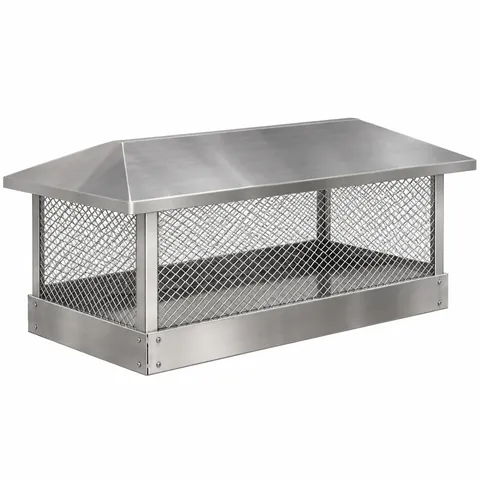
Draft King Custom BigTop Stainless Multi-Flue Cap
What we like
- Made to your crown size
- Lifetime warranty on stainless
- Three mesh heights
What we don't like
- Lead time for custom sizes
- Needs anchoring into the crown
Our pick for chimneys with two or more flues. It is built to your crown measurements in 304 stainless and carries a lifetime warranty, and one cap protects every flue and the crown at once.
Mesh: 18 gauge 304 stainless | Mesh heights: 8, 10 or 14 in | Warranty: Lifetime on stainless | Made in: USA
4. Best large crown
The Forever Cap Multi-Flue Crown Mount Cap
What we like
- Large crown sizes in stock
- Crown mount covers every flue
- Stainless
What we don't like
- Mesh height not stated in the listing we checked
- Large and heavy
A stock stainless crown mount cap in large sizes such as 31 x 37 in. Check the mesh height against your tallest flue before buying.
Material: Stainless steel | Mount: Crown mount | Example size: 31 x 37 in
5. Best against bats and embers
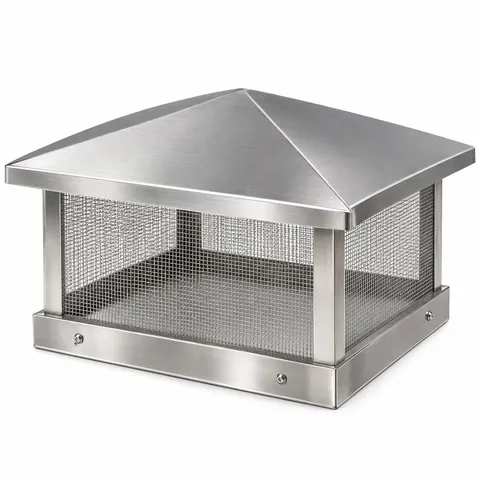
HY-C U1313S58 Stainless Universal Cap, 5/8 in Mesh
What we like
- 5/8 in mesh for spark control
- 304 stainless resists heat and corrosion
- Universal fit covers several tile sizes
What we don't like
- 5/8 in may not meet the stricter IRC 1/2 in limit; check locally
- Finer mesh needs cleaning more often
Where embers are a concern, this is the cap we would look at first. HY-C sells it mainly for spark protection, and the 5/8 in mesh is the figure commonly cited for California. Under the IRC model code the opening must be smaller than 1/2 in, so confirm with your local fire authority before buying.
Material: 304 stainless steel | Mesh: 5/8 in | Fits: Range of clay tiles up to 13 x 13 in
6. Best for big tiles
Draft King SS1515U Stainless Single Flue Cap
What we like
- Outside mount keeps the full flue opening clear
- Same heavy base gauge as the Shelter line
- Rated by the maker for oil, coal and heavy wood use
What we don't like
- Only for larger square tiles
- Black finish not offered in this model
Draft King is HY-C's contractor line, and the SS1515U is the stainless model for larger 15 x 15 in tiles. The outside mount design is meant to leave the most free air space, which matters on big fireplaces that need strong draft. Pick it when your tile is too big for the common 13 x 13 caps.
Material: Stainless steel | Hood: 24 gauge | Mesh: 18 gauge, 3/4 in | Base: 16 gauge | Fits: 15 x 15 in tiles
7. Best budget
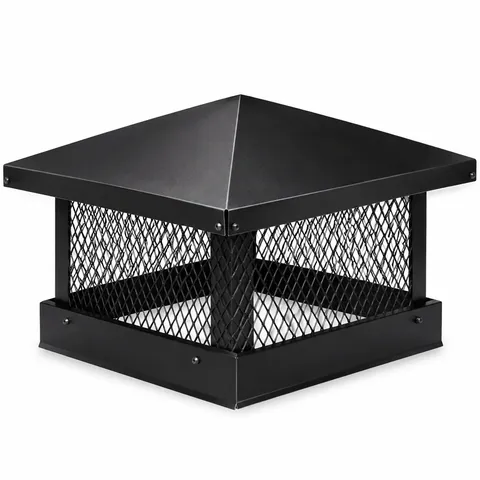
HY-C Shelter Black Galvanized Single Flue Cap (SC99)
What we like
- One of the lowest priced name brand caps
- Light at 4 lb
- Black coat suits dark roofs
What we don't like
- Rusts once the coating wears
- Not for wood, oil or coal as main fuel
The classic budget cap. It does the basic jobs, keeping rain and animals out of a small flue, at a low price. Put it on a gas flue or an unused chimney in a mild climate, not on a busy wood stove.
Material: Galvanized steel, black powder coat | Hood: 24 gauge | Mesh: 3/4 in | Fits: 9 x 9 in tile | Weight: 4 lb
8. Best budget fine mesh
HY-C CBC1313 Black Galvanized Cap, 5/8 in Mesh
What we like
- Low cost way to get 5/8 in spark mesh
- Black finish blends with dark roofs
- 7 year limited warranty
What we don't like
- Galvanized is not recommended for wood, oil or coal as the main fuel
- Shorter life than stainless
A budget spark mesh cap for gas or occasional use flues. The 7 year warranty is decent for galvanized, but HY-C itself advises against painted galvanized caps when wood, oil, coal or pellets are the main fuel.
Material: Black galvanized steel | Mesh: 5/8 in | Size: 13 x 13 in | Warranty: 7 year limited
9. Best for round flues
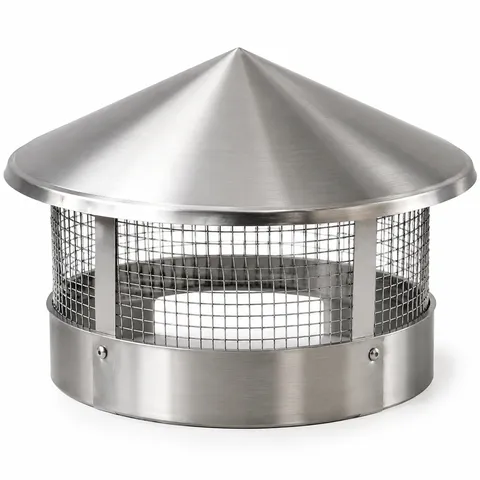
Round Stainless Steel Chimney Cap, 3/4 in Mesh
What we like
- Custom fit for round flues
- Stainless for every fuel
- 3/4 in mesh slows clogging
What we don't like
- Custom lead time
- Not a spark arrestor
The stainless version of the round custom cap. It is the one to choose for a round clay flue on a wood burning fireplace.
Material: Stainless steel | Mesh: 3/4 in | Sizes: Custom
10. Best round screen
Round Galvanized Spark Arrestor and Animal Screen (10 in)
What we like
- Heavy 16 gauge mesh
- Fits round clay or metal flues
- Doubles as an animal guard
What we don't like
- Galvanized; not for heavy wood use
- Round flues only
Round flues are harder to cap than square tiles. This screen fits a 10 in round flue and uses heavy 16 gauge 5/8 in mesh, which stops animals and embers on gas or light use chimneys.
Material: Galvanized steel | Mesh: Heavy 16 gauge, 5/8 in | Fits: 10 in round flue
Key Takeaways
- Any well fitted chimney cap with 3/4 inch or smaller mesh keeps out birds, squirrels and raccoons. The fit matters as much as the mesh.
- Raccoons are strong. Choose heavy mesh, a thick base and bolts or anchors, not friction fit or tape.
- Never cap a chimney with animals inside. Make sure they have left first, and check federal and state wildlife rules for birds and bats.
- Chimney swifts are a protected migratory bird. Many bats are protected too. Timing and exclusion rules apply.
- A multi flue cap that covers the crown leaves no gaps between flues for animals to squeeze through.
A chimney looks like a hollow tree to a raccoon, a cliff to a bird and a dry den to a squirrel. Without a cap, animals move in, build nests that block the flue, and sometimes fall into the firebox or die in the smoke chamber. The fix is a chimney cap animal guard that fits tightly and is strong enough to hold off a determined raccoon.
This guide explains what makes a cap animal proof, which caps work best for each animal, and how to cap a chimney safely and legally if animals are already inside.
What Makes a Chimney Cap Animal Proof?
1. Mesh Size
Mesh openings of 3/4 inch or smaller keep out birds, squirrels and raccoons. Most quality caps, such as the HY-C Shelter stainless cap with 18 gauge 3/4 inch expanded mesh, meet this. Smaller openings are needed to stop bats and are often required where spark arrestor rules apply.
2. Mesh Strength
Raccoons pull and squirrels chew. Heavy gauge expanded metal mesh resists both far better than thin woven screen. Avoid plastic or aluminum screen on a chimney.
3. Fit with No Gaps
The gap between the cap’s base and the flue tile is where most animals get in. A cap that is one size too big leaves a gap. Measure carefully and choose the cap that fits your tile, using the guide on how to measure for a chimney cap.
4. Secure Fastening
Raccoons are strong enough to lift a cap that only sits in place. Bolt-on caps with a thick base, like the HY-C Shelter with 16 gauge flanges and slotted hex head bolts, or the Shelter Pro with a 2 1/4 inch locking band, are much harder to remove.
5. Cover the Whole Crown on Multi Flue Chimneys
Animals can get between flues and under a crown overhang. A multi flue cap anchored to the crown closes those gaps.
Chimney Caps for Birds
Birds, especially chimney swifts and starlings, use open chimneys for nests. A cap with intact 3/4 inch mesh keeps them out.
Chimney Swifts Are Protected
Chimney swifts are protected under the federal Migratory Bird Treaty Act. You generally may not remove active nests, eggs or young. Swifts usually leave in the fall to migrate, and that is the time to sweep the chimney and fit a cap. If birds are in the chimney now, read birds in chimney before doing anything.
Other Birds
Starlings and house sparrows are not native and are not protected the same way, but it is still best to wait until nesting is over and the birds have left before capping.
Chimney Caps for Raccoons
Raccoons often use chimneys as dens to raise their young in spring. They are the toughest animal to keep out.
- Choose a heavy cap. A 24 gauge hood and 16 gauge base are much stronger than a light hardware store screen.
- Bolt it down. Use every bolt hole. Tighten firmly against the tile.
- Fix the crown first. A crumbling crown gives raccoons something to pull against.
- Make sure they are gone. Never cap a chimney with a mother raccoon or kits inside.
Chimney Caps for Squirrels
Squirrels can chew through thin screens and fit through surprisingly small gaps. A cap with 3/4 inch or smaller steel mesh and no gaps at the base stops them. If squirrels are already in the chimney or attic, see raccoon or squirrel in chimney.
Chimney Caps for Bats
Bats can squeeze through gaps around half an inch wide or less. A tight fitting cap with fine mesh helps, but bats need special care:
- Many bat species are protected, and some states restrict exclusion during the maternity season when young cannot fly.
- Never trap bats inside. Use one way exclusion devices so bats can leave but not return, then cap the chimney once they are gone.
- Do not handle bats. Bats can carry rabies.
Chimney Caps for Snakes and Insects
Snakes and insects are less common, but they happen. Snakes can climb rough brick. Wasps and bees can build nests under the lid. Fine mesh helps with snakes. For insects, inspect the underside of the lid each spring and remove any nests early. Never use spray insecticide near a chimney you plan to light.
How to Cap a Chimney When Animals Are Already Inside
Capping a chimney with an animal inside traps it. It will die there, smell, attract insects and may block the flue. Follow these steps instead:
Step 1: Confirm What Is in the Chimney
Listen for chirping, scratching or crying. Look from the roof with a flashlight. Note the time of year: spring often means young animals.
Step 2: Check the Rules
Federal law protects chimney swifts and other migratory birds. State laws protect many bats and may control trapping of raccoons and squirrels. Your state wildlife agency can tell you what applies.
Step 3: Let the Animal Leave, or Call a Professional
Close the damper and any fireplace doors so the animal cannot enter the house. Many animals leave on their own once young are grown. For raccoons, squirrels and bats, a licensed wildlife control operator can remove or exclude them humanely.
Step 4: Clean and Inspect the Flue
Nests are fire hazards. Have a chimney sweep remove nesting material and check for damage before using the fireplace.
Step 5: Fit the Cap
Once the chimney is empty, fit a properly sized cap (here’s how to install a chimney cap) with secure fasteners.
Signs Animals Are Getting Past Your Cap
- Scratching or chirping in the chimney.
- Nesting material, droppings or feathers in the firebox.
- A bent, lifted or chewed cap.
- A strong smell from the fireplace.
If you see these, inspect the cap for gaps, loose bolts or damaged mesh, the most common chimney cap problems with animals. A cap that keeps getting defeated may be the wrong size or too light.
Spark Arrestor Caps Double as Animal Guards
Any cap with a spark arrestor screen keeps animals out, because spark arrestor openings are smaller than 3/4 inch. If you also burn wood in a wildfire area, one cap can do both jobs.
How Much Does an Animal Proof Chimney Cap Cost?
An animal proof cap costs the same as any quality cap of its size and material. HomeGuide puts most cap and installation jobs between $200 and $850. Wildlife removal and chimney cleaning are separate costs.
Animal Guard Checklist
- Empty chimney: confirm no animals or young are inside.
- Legal check: federal and state wildlife rules, especially for chimney swifts and bats.
- Mesh: 3/4 inch or smaller, heavy gauge, expanded metal.
- Fit: sized to the actual tile, no gaps.
- Fastening: bolts, bands or anchors, all tightened.
- Crown: sound, no loose pieces for animals to pull on.
- Damper: closed and working as a second barrier.
Why Animals Choose Chimneys
A chimney is warm, dry, high above predators and close to food. Chimney swifts nest on the rough inside walls of masonry flues, much as they once nested in hollow trees. Raccoons use the smoke shelf above the damper as a den, especially in spring. Squirrels and birds drop in by accident and cannot climb out of smooth metal liners. Bats roost in crevices near the top. A cap removes the entry point for all of them.
The Danger of Nests in a Chimney
Nests are made of twigs, leaves, grass and droppings, all of which burn. A nest in the flue can:
- Catch fire from sparks and start a chimney fire.
- Block the flue, forcing smoke and carbon monoxide into the house.
- Bring parasites such as mites and fleas.
- Cause odors from droppings or dead animals.
Have a chimney sweep remove any nest before lighting a fire, and fit a cap once the chimney is empty.
Repellents and DIY Guards to Avoid
Some advice suggests mothballs, ammonia, loud music or lights to drive animals out. Mothballs and ammonia are toxic in a closed space and are not approved for this use. Never light a fire or use smoke to drive animals out: you can trap and kill them, and nesting material can catch fire.
Also avoid DIY guards made from chicken wire or hardware cloth stapled over the flue. They rust, block airflow and are easily torn off by raccoons. A proper cap costs little more and lasts far longer.
What to Do If an Animal Falls into the Fireplace
If a bird or squirrel ends up in the firebox:
- Close the fireplace doors or cover the opening with cardboard.
- Close room doors and open an outside window or door in that room.
- Turn off the lights in the room.
- Carefully open the fireplace doors and leave. Most animals head for the daylight.
For raccoons, bats or any animal that seems sick or aggressive, call a licensed wildlife control operator.
When to Fit an Animal Guard
The best time to cap a chimney for animals is late summer or early fall, after nesting season and after migratory birds such as chimney swifts have left, and before you start using the fireplace. Have the chimney swept, check it is empty, and fit the cap the same day.
Common Animal Guard Mistakes
- Capping with animals inside. Trapped animals die in the flue or find their way into the house. Confirm the chimney is empty first.
- Capping only one flue. Animals use any open flue. Cap them all or fit a multi flue cap.
- Using a cap that is too big. Gaps at the base let squirrels and bats slip under.
- Relying on screws alone. Raccoons pull weak caps off. Use bolts, a band or crown anchors.
- Choosing galvanized mesh on a wood flue. It rusts open within a few seasons.
- Ignoring the rest of the roof. Animals blocked at the chimney may move to attic vents or gaps in the flashing.
Questions to Ask Before You Buy
- Which animals are a problem here? Raccoons need heavy gauge construction; bats need a gap free fit.
- What fuel do I burn? Wood, oil and pellets need stainless or copper.
- Does local code require a spark arrestor? If so, the finer mesh also blocks animals.
- How many flues are there? One cap per flue, or a multi flue cap.
- Is the tile sound? A cracked tile cannot hold a clamp on cap securely.
- Will I install it myself? Heavy caps and steep roofs favor a professional.
Animal Guard Maintenance Through the Year
| Time | Check |
|---|---|
| Late winter | Cap secure before spring nesting begins |
| Spring | Listen for animals; look for nesting material |
| Summer | Watch for birds or bats at dusk |
| Fall | Clear leaves; check mesh after storms |
| During inspection | Ask the sweep to photograph the cap |
How Animal Guards Fit with Other Cap Features
An animal guard is a feature more than a separate product type. Almost every chimney cap with intact 3/4 inch mesh keeps out birds, squirrels and raccoons. What makes a cap a good animal guard is how it is built and fitted: thick metal, tight mesh with no gaps, and strong fastening. You can get these qualities in a single flue cap, a multi flue cap, a wind cap or a spark arrestor, so choose the type your chimney needs and then check it is built well enough to stop the animals in your area.
Quick Verdict by Situation
| Situation | What to choose |
|---|---|
| Birds nesting each spring | Stainless cap with intact 3/4 inch mesh, fitted in late fall |
| Raccoons pulling caps off | Heavy gauge stainless, bolted or crown anchored |
| Bats at dusk | Gap free fit, every flue covered, after professional exclusion |
| Several flues | Multi flue cap over the whole crown |
| Wildfire area | Spark arrestor cap, which also blocks animals |
If you are unsure which animal you have, listen at dusk and dawn and check droppings before choosing.
The Bottom Line
The best chimney cap to keep animals out is a stainless cap with heavy 3/4 inch or smaller mesh, sized to fit the flue with no gaps and bolted firmly in place. On multi flue chimneys, cover the whole crown. Most important of all, make sure every animal is out, and follow wildlife rules for birds and bats, before you cap.
Frequently asked questions
What is the best chimney cap to keep animals out?
A stainless cap with 3/4 inch or smaller heavy gauge mesh and a bolted base that fits the flue tile with no gaps. On multi flue chimneys, a multi flue cap anchored to the crown.
Does a chimney cap keep birds out?
Yes. A cap with intact mesh keeps birds from entering the flue. Remove any nests and make sure no birds are inside before fitting it.
Does a chimney cap keep squirrels out?
Yes, if the mesh is 3/4 inch or smaller and there are no gaps at the base. Squirrels can chew thin screens, so choose metal mesh, not plastic.
Can raccoons get past a chimney cap?
Raccoons can pull loose or poorly fastened caps apart. A cap with a heavy base bolted to the flue tile is much harder to defeat.
Does a chimney cap keep bats out?
Bats can squeeze through very small gaps. A tight fitting cap with fine mesh helps, but bats should be excluded with one way devices at the right time of year, not trapped.