
Chimney Cap Problems and How to Fix Them
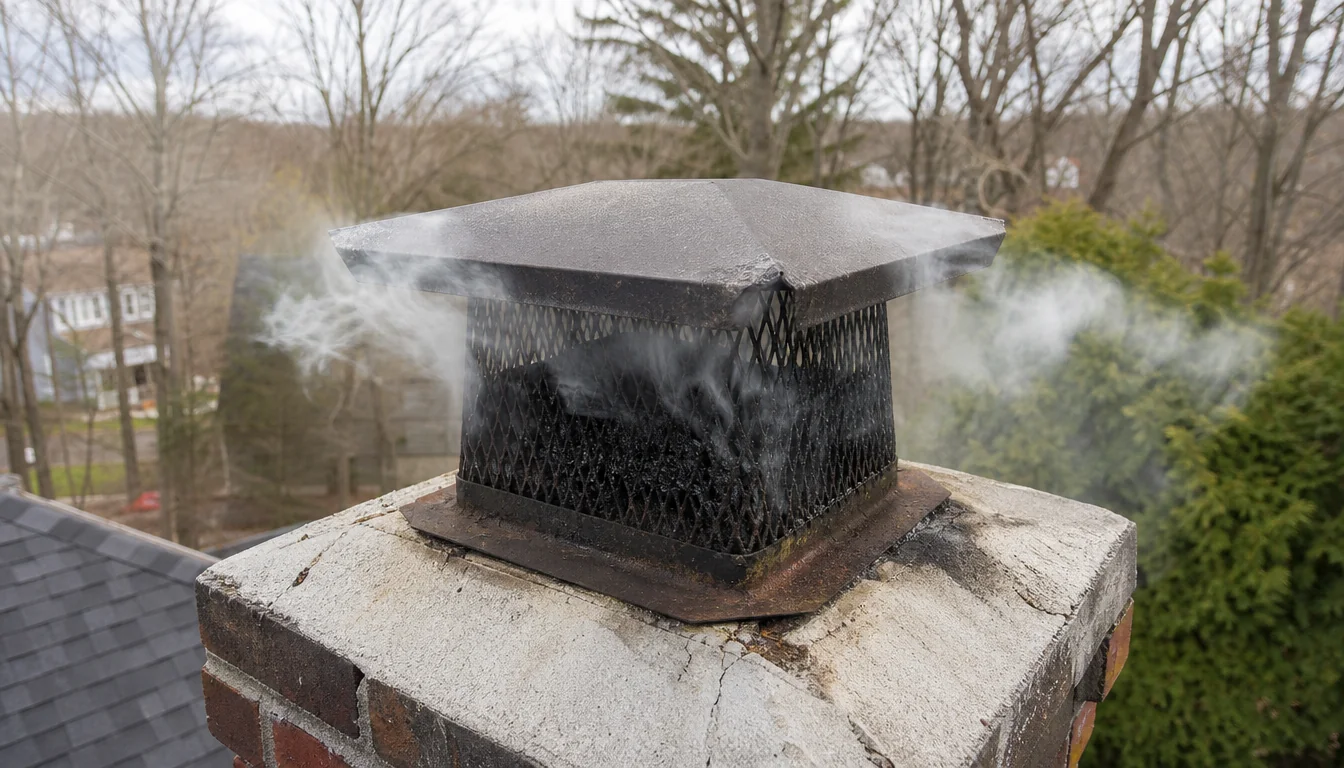
Key Takeaways
- Most chimney cap problems come from the wrong size, a clogged screen, or a cap that does not suit the chimney or fuel.
- A clogged cap is the most common cause of new smoke spillage. Burn dry wood, clean the screen and have the chimney swept.
- A black cap is normal soot from use; thick, shiny black buildup is creosote and needs cleaning.
- Noise usually means loose bolts, bent mesh or a dry rotating bearing.
- If a smoke or carbon monoxide problem appears, stop using the appliance and have it inspected.
A chimney cap should be a part you never think about. When it causes trouble, the symptoms show up inside the house: smoke in the room, smells, noise, or a stove that will not draw. Most chimney cap problems have simple causes and simple fixes, once you know what to look for. Most of these problems start with the wrong cap, which is why our best chimney caps list leans on proper sizing and heavy mesh.
This guide lists the common symptoms, what causes each one, and how to fix it. For safety, remember: smoke or carbon monoxide entering the home is never something to live with. Stop using the appliance and get it checked.
Quick Symptom Guide
| Symptom | Most likely cause | First fix |
|---|---|---|
| Smoke in the room since the cap went on | Cap too small or too low | Check size and fit |
| Smoke getting worse over the season | Clogged mesh | Clean the cap, sweep the chimney |
| Smoke only on windy days | Wind downdraft | Wind directional or draft inducing cap |
| Smoke coming out around the cap base | Clogged mesh or undersized cap | Clean; check size |
| Rattling or whistling | Loose bolts or mesh | Tighten; straighten |
| Squeaking | Dry rotating bearing | Clean and lubricate |
| Black cap | Soot or creosote | Clean if heavy |
| Ice on the cap | Fine mesh in cold weather | Larger mesh |
| Water in the firebox | Cap size, crown or flashing | See rain cap guide |
| Animals still getting in | Gaps or damaged mesh | Refit or replace |
Can a Chimney Cap Cause Smoke Problems?
Yes. A chimney cap reduces the open area at the top of the flue. A properly sized cap leaves plenty of room; model codes require at least four times the flue area. A cap that is too small, sits too low, or has blocked mesh cuts that open area and slows the smoke. The result is smoke spilling into the room, especially when you first light the fire or open a stove door.
How to Tell If the Cap Is the Cause
- The problem started right after a new cap went on: check size and height.
- The problem built up over weeks: the mesh is probably clogging.
- The problem comes and goes with wind: downdraft, not the cap itself.
- The problem happens at the start of every fire and then clears: cold flue.
Fixes
- Replace an undersized cap with the correct size.
- Clean clogged mesh.
- For wind, see wind directional chimney caps and chimney downdraft.
Can a Chimney Cap Get Clogged?
Yes, and it is the most common cap problem on wood burning chimneys.
What Clogs a Cap
- Creosote: tar from wood smoke that condenses on cold metal.
- Fly ash and soot.
- Leaves and pine needles.
- Nests.
- Ice and frost in very cold weather.
Signs of a Clogged Cap
- Smoke spills into the room.
- The fire is slow to start or will not stay lit.
- Stove glass blackens quickly.
- From outside, smoke leaves unevenly or puffs from the base.
How to Unclog a Chimney Cap
- Let the fire go out and the chimney cool fully.
- Get on the roof safely, with fall protection.
- Remove the lid or screen if it is removable.
- Brush off creosote and ash with a stiff nylon or stainless brush.
- Clear leaves and nests.
- Refit and check the fasteners.
- Have the whole chimney swept if the cap was heavily clogged, because the flue will be too.
How to Stop It Happening Again
- Burn dry, seasoned wood.
- Avoid long smoldering burns.
- Use larger mesh where your code allows.
- Choose a cap with a removable screen for easy cleaning.
- Sweep the chimney at least yearly, as NFPA 211 recommends.
The full guide is chimney cap clogged with creosote.
Can a Chimney Cap Cause Downdrafts?
A cap does not usually cause downdraft, but a poorly chosen one can make it worse:
- A cap that is too small or too low chokes the outlet.
- A tall box cap on an exposed chimney can catch gusts and push air down.
- A rotating cap that is stuck facing the wrong way blocks the outlet.
If downdraft started after a new cap, check the cap first. If it has always happened on windy days, look at chimney height, nearby obstacles and house pressure.
Can a Chimney Cap Reduce Draft?
A correctly sized clean cap has little effect on draft. A cap reduces draft when:
- It is undersized for the flue.
- Its mesh is clogged.
- It is set too low over the flue.
- Extra screens or hardware cloth were added.
Fix the cause and draft returns.
Can a Chimney Cap Be Too Restrictive?
Yes. This happens most with:
- Very fine mesh added for spark control without enough height to keep the net free area up.
- Undersized caps bought to “fit tight.”
- Homemade guards of hardware cloth.
A restrictive cap is a safety issue, especially on gas appliances where blocked venting can push carbon monoxide into the house.
Why Is My Chimney Cap Turning Black?
A chimney cap turns black for two reasons:
- Soot: a light, dry, matte black film from normal fires. It is cosmetic.
- Creosote: sticky, flaky, crusty or shiny black buildup on the mesh. It is a fire hazard and a clogging risk.
If the cap is dark but the mesh is open, it is just soot. If the mesh openings are narrowing or there are lumps of shiny black material, clean the cap and have the chimney swept. Glazed, glossy creosote is a sign of very cool, smoky burning and needs professional cleaning.
Why Is My Chimney Cap Making Noise?
Rattling
Loose bolts, a loose lid, or a cap that is too big for the tile will rattle in wind. Tighten every fastener evenly. If the cap is too big, replace it.
Whistling or Humming
Wind passing over mesh or a loose panel can whistle. Straighten bent mesh and tighten panels.
Squeaking or Grinding
Rotating wind directional caps squeak when the bearing is dry or dirty. Clean and lubricate with the high temperature product the maker recommends, or replace the bearing.
Roaring
A loud roaring sound inside the chimney during a fire, like a freight train, can be a chimney fire. Close the appliance air controls, get everyone out and call 911.
Why Is Smoke Coming Out Around My Chimney Cap?
Smoke should leave through the mesh evenly. Smoke leaving at the base or puffing out around the cap means:
- Clogged mesh, so smoke finds the easiest gap.
- Undersized cap, so the mesh area is too small.
- Gaps at the base of an oversized cap.
Smoke coming out of the crown, brick or mortar joints below the cap is more serious. It means the flue tile or liner may be cracked. Stop using the fireplace and have the chimney inspected.
Can a Chimney Cap Freeze?
Yes. In very cold weather, water vapor in the flue gases freezes on the cold mesh. This is most common on:
- Gas appliances, which produce lots of water vapor.
- Fine mesh caps.
- Wood stoves burning low and slow.
A frozen cap blocks draft and can push gases into the home. One cap maker advises that mesh smaller than 3/4 inch can ice up in winter. If your cap ices, use 3/4 inch mesh where code allows, and have a technician check that the appliance is venting correctly.
Can a Chimney Cap Catch Fire?
The metal will not burn, but creosote, nests and leaves on the cap can. A chimney fire that reaches the top can ignite creosote on the mesh and throw burning debris onto the roof. Keep the cap clean and have the chimney swept. If you suspect a chimney fire, call 911.
Can a Chimney Cap Rust?
Galvanized caps rust once their coating wears. Stainless caps resist rust but can show surface staining near salt water or if steel tools touched them. Copper does not rust; it develops a patina. Once rust has eaten through, patching rarely lasts, and a chimney cap replacement is the cheaper fix over time.
Can a Chimney Cap Leak?
A cap can let water in if it is too small, set too high, bent or clogged. More often, leaks blamed on the cap come from the crown, flashing or brick. See the guide to leaking chimney caps under the rain cap section.
Why Does My Chimney Smell?
Chimney smells are usually caused by:
- Wet creosote after rain gets in, a sharp, smoky, asphalt smell.
- Animals or nests in the flue.
- Negative pressure pulling air down the chimney into the room.
A cap stops rain and animals, the first two causes. For pressure, open a window or ask about makeup air. Have the chimney swept to remove creosote.
Does a Chimney Cap Stop Leaves from Entering?
Yes. The mesh keeps out leaves, twigs and pine needles. Leaves can still pile up against the mesh from outside, so check the cap in fall if you have trees overhead.
Animals Getting Past the Cap
If birds, squirrels or raccoons still get in:
- Check for gaps at the base.
- Check for torn or rusted mesh.
- Check the cap has not been lifted or loosened.
- Check for other entry points, such as gaps around the crown or a second uncapped flue.
A heavier chimney cap animal guard with secure fasteners usually ends the problem for good.
When to Call a Professional
Call a certified chimney sweep if:
- Smoke enters the house and simple fixes do not help.
- You see smoke from the brick or crown.
- You hear roaring or see flames from the top.
- Your carbon monoxide alarm sounds (call 911 or the gas company first).
- Creosote is thick, shiny or glazed.
- You cannot safely reach the cap.
Problems by Appliance Type
Different appliances cause different cap problems. Use this to narrow down what you are seeing.
Open Wood Fireplaces
- Common problems: creosote on the mesh, smoke spillage on start up, leaves and nests, rain in the firebox.
- Why: open fireplaces pull lots of room air and often burn cooler than stoves.
- Prevention: dry wood, hot starts, yearly sweeping, a cap with a wide lid and removable screen.
Wood Stoves and Inserts
- Common problems: heavy creosote clogging, especially on fine mesh.
- Why: low air settings for long burns make cool, smoky exhaust.
- Prevention: burn hot, use dry wood, check the cap monthly in heating season.
Pellet Stoves
- Common problems: fly ash on the vent cap, stove shutting down on low draft.
- Why: pellets produce fine ash.
- Prevention: clean the vent cap as the stove manual directs.
Gas Fireplaces and Gas Appliances
- Common problems: frost or ice on fine mesh, nests, blocked vents.
- Why: gas combustion produces a lot of water vapor; gas flues stay quiet, so animals move in.
- Prevention: use the cap listed for the appliance or vent; check for nests every year.
Oil Furnaces and Boilers
- Common problems: soot buildup and corrosion of galvanized caps.
- Why: oil flue gases are acidic.
- Prevention: stainless or copper caps; regular service of the burner.
Problems with Rotating Caps
Rotating wind directional caps fix downdraft for many homes but have their own problems:
- Stuck rotation: the bearing is dirty, rusted or iced. The cap faces the wrong way and can make downdraft worse.
- Squeaking: a dry bearing.
- Wobbling: loose fasteners or a worn bearing.
- Creosote buildup: on wood flues, creosote can glue the moving parts.
Check rotating caps more often than fixed caps, clean and lubricate them as the maker recommends, and replace worn bearings.
Problems with Top Mount Damper Caps
Top mount damper caps seal the flue at the top with a lid operated by a cable from the firebox. Common issues:
- Cable slips or breaks: the lid will not open or close properly.
- Gasket wears: the seal leaks cold air.
- Lid sticks with creosote or ice.
- Lid left closed while lighting a fire, filling the room with smoke.
Always check the damper is fully open before lighting a fire. If the cable fails, the lid may be stuck closed, so do not use the fireplace until it is fixed.
Seasonal Problem Calendar
| Season | Common cap problems | What to check |
|---|---|---|
| Spring | Animals nesting, freeze damage to crowns | Cap fastened, mesh intact, crown cracks |
| Summer | Smells, birds, rain blowing in | Wide lid, gaps, creosote smell |
| Fall | Leaves on mesh, storm damage | Clean mesh, tight bolts |
| Winter | Creosote clogging, ice on mesh, downdraft | Inspect cap during heavy use |
A Simple Maintenance Routine
Most cap problems are prevented with a few simple habits.
- Yearly: have the chimney inspected and swept as needed, as NFPA 211 recommends. Ask the sweep to check and photograph the cap.
- Each fall: look at the cap from the ground with binoculars for rust, tilt and leaves.
- During heavy use: check for signs of clogging, such as smoke spillage or slow starts.
- After storms: check the cap is still level and attached.
- Every few years: on rotating caps, clean and lubricate the bearing.
DIY or Professional?
| Problem | DIY if safe | Professional |
|---|---|---|
| Loose bolts | Yes | If the tile is cracked |
| Leaves on mesh | Yes | If you cannot reach safely |
| Light creosote on mesh | Yes | If heavy or glazed |
| Damaged mesh | Replace the cap | Recommended |
| Smoke in the house | Basic checks only | Yes |
| Carbon monoxide alarm | No | Call 911 or the gas company first |
| Animals in the flue | No | Wildlife professional |
| Stuck damper cap | Simple cable adjustment | Yes if it will not open |
Problem Examples
These examples show how symptoms point to causes. They are illustrations, not real customer cases.
“Smoke Spills Only When I First Light the Fire”
This is usually a cold flue, not the cap. Warm the flue by holding a burning roll of newspaper near the damper, then light a small, hot fire. If it clears once the fire is going, the cap is not the problem.
“It Drew Well for Years, but Now Smoke Spills Every Time”
Suspect a clogged cap or a dirty flue. Check the mesh. Have the chimney swept.
“Smoke Spills Only on Windy Days from the West”
This points to wind downdraft. Look for nearby trees or roof ridges to the west. Consider a wind directional or draft inducing cap, or raising the chimney.
“We Hear Rattling Every Time the Wind Blows”
Loose bolts or a cap that is too big. Tighten or replace.
When a Cap Is Not the Problem
Some symptoms blamed on caps come from elsewhere:
- Smoke at the start of fires: cold flue.
- Smoke when the range hood runs: house pressure.
- Water on ceilings near the chimney: flashing.
- Rust streaks on chase siding: chase cover.
- Smells in summer: creosote in the flue reacting with humidity.
Fixing the real cause saves money on a cap you do not need.
Problem Prevention Checklist
- Buy the correct size for the flue.
- Choose stainless or copper for wood, oil, coal and pellet flues.
- Use the largest mesh your local code allows.
- Pick a cap with a removable screen or lid for cleaning.
- Fasten it evenly and firmly.
- Burn dry, seasoned wood hot.
- Have the chimney inspected every year, as NFPA 211 recommends.
- Check the cap after storms.
- Keep tree branches trimmed back from the chimney.
- Fit carbon monoxide alarms on every level of the home.
Questions to Ask Your Sweep About Cap Problems
- Is the cap the right size for my flue?
- Is the mesh clogging, and how fast?
- Is the cap suited to my fuel and appliance?
- Would a different type, such as a wind cap or damper cap, solve my problem?
- Is the crown or flue tile damaged under the cap?
- How often should I check the cap given how I use the fireplace?
A sweep who sees your chimney in person can answer these better than any general guide, so bring the list to your next inspection.
The Bottom Line
Most chimney cap problems come down to size, cleanliness or the wrong cap for the job. Measure and fit the right size, keep the mesh clean, burn dry wood, and choose a cap suited to your fuel and wind. When smoke, smells or carbon monoxide appear in the house, stop using the appliance and get it inspected.
Frequently asked questions
Can a chimney cap cause smoke problems?
Yes. A cap that is too small, set too low, or clogged reduces draft and can push smoke into the room.
Can a chimney cap get clogged?
Yes. Creosote, fly ash, leaves, nests and ice can block the mesh, especially fine spark arrestor mesh on wood burning chimneys.
Why is my chimney cap turning black?
Soot from normal fires darkens the cap. Thick, shiny or crusty black buildup on the mesh is creosote, which should be cleaned off.
Why is my chimney cap making noise?
Loose bolts, a loose lid, bent mesh or a dry rotating bearing can rattle, whistle or squeak in the wind.
Why is smoke coming out around my chimney cap?
Smoke leaving at the base suggests the mesh is clogged or the cap is too small. Smoke from cracks in the crown or masonry suggests a damaged flue.
Can a chimney cap freeze?
Fine mesh can collect frost and ice in very cold weather, especially on gas flues that produce lots of water vapor. 3/4 inch mesh is less prone to it.