
Bats in Chimney: Safe, Legal Removal and Prevention
Key Takeaways
- Bats squeeze through very small gaps, so a cap with gaps or torn mesh will not stop them.
- Many bat species are protected, and many states restrict exclusion during the summer pup season.
- Bats are removed by exclusion: one way devices let them out but not back in. Never seal bats inside.
- Bats can carry rabies. Never handle a bat with bare hands, and call your health department after any possible contact.
- After exclusion, cap the chimney and seal other gaps.
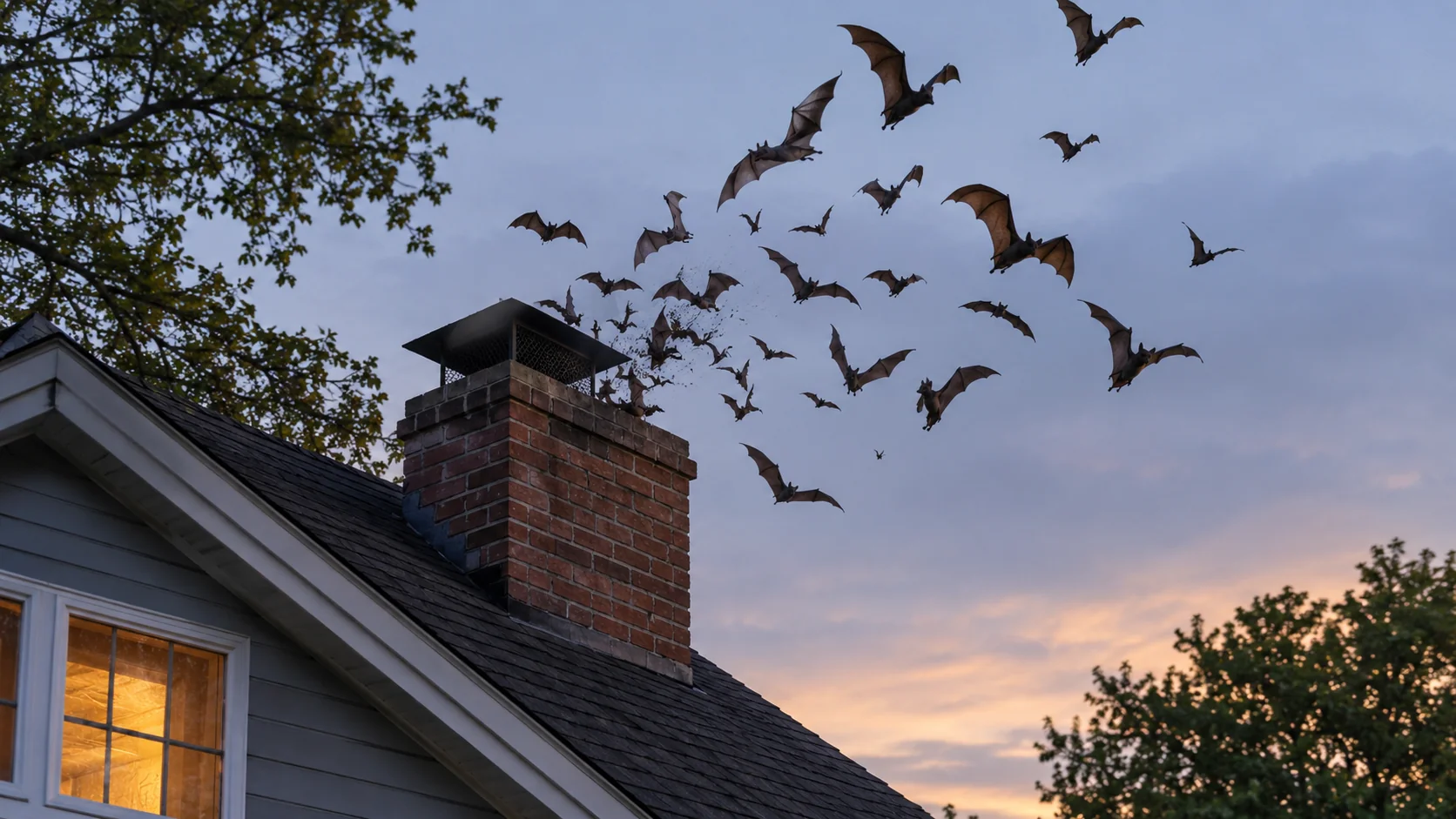
Scratching and squeaking at dusk, dark droppings in the firebox, or a stream of small shapes leaving the chimney top at sunset: these are signs of bats in the chimney. Bats are helpful insect eaters, but they should not live in your flue.
Bats are different from birds and raccoons in two important ways: many are legally protected, and they can squeeze through tiny gaps. Here is how to handle them correctly.
Signs of Bats in the Chimney
- Squeaking, rustling or scratching, especially at dusk and dawn.
- Small dark droppings (guano) in the firebox or on the hearth; they crumble into dust.
- Bats leaving the chimney top around sunset.
- Stains around gaps at the top of the chimney.
- A bat in the house.
Health Risks
- Rabies: bats are a leading source of rabies in the United States. Never touch a bat with bare hands. If a bat was in a room where someone was sleeping, or with a child or pet, or anyone may have been bitten, contact your health department or doctor right away.
- Histoplasmosis: fungal spores can grow in bat and bird droppings. Avoid disturbing large amounts of guano.
Bats Are Often Protected
Many bat species are protected by state or federal law, and some are endangered. Many states also restrict exclusion during the summer maternity season, when flightless pups are in the roost. Excluding adults then would trap the young inside to die.
Rules vary by state, so check with your state wildlife agency or a licensed wildlife professional before acting.
How Bats Are Removed: Exclusion
Bats are not trapped or killed. They are excluded:
- Inspect to find every entry point, including the chimney top and gaps in the crown or flashing.
- Seal secondary gaps, leaving the main exit open.
- Install a one way exclusion device over the exit, such as a tube or netting, so bats can leave at night but cannot get back in.
- Wait several nights until all bats have left.
- Remove the device and seal the opening; on a chimney, that means fitting a cap.
Timing matters: exclusion is done in spring or fall, outside the pup season.
What Not to Do
- Never cap or seal a chimney with bats inside. They will die in the flue or find their way into the house.
- Never light a fire to drive them out.
- Do not use poisons. They are illegal for bats in many places and leave dying bats in the house.
- Do not try to catch bats with bare hands.
A Bat in the House
If a single bat gets into a room:
- Keep people and pets out of the room.
- Close interior doors and open a window or outside door.
- Turn off the lights and wait; the bat will usually fly out.
If you have to catch it, wear thick gloves, wait until it lands, cover it with a box, slide card underneath and release it outside. If there is any chance of contact with a person or pet, contact your health department before releasing it, because they may want it tested.
Cleaning Up After Bats
Guano and debris on the smoke shelf should be removed by a sweep or wildlife cleanup professional using protective equipment. Do not sweep or vacuum dry guano yourself.
Keeping Bats Out with a Chimney Cap
Bats can fit through very small openings, so the cap must be well fitted:
- No gaps at the base where the cap meets the flue tile or crown.
- Intact mesh, with no tears or rust holes.
- Securely fastened, so the base cannot lift.
- Every flue covered, or a multi flue cap over all of them.
Some homeowners choose finer mesh in areas with lots of bats, but fine mesh clogs faster on wood burning chimneys. Ask a sweep what suits your chimney.
Seal Other Gaps
Bats also enter through gaps around flashing, cracked crowns, loose mortar and attic vents. Seal them after exclusion.
Building a Bat House
If you want to keep bats around for insect control without having them in the chimney, a bat house mounted on a pole or building nearby gives them an alternative roost.
How to Tell Bats from Birds or Squirrels
Many animals make noise in a chimney, and the right response differs for each. Use timing, sound and droppings to tell them apart.
| Clue | Bats | Birds | Squirrels | Raccoons |
|---|---|---|---|---|
| Active | Dusk and night | Daytime | Daytime | Dusk and dawn |
| Sound | High squeaks, light rustling | Chirping, fluttering | Scratching, scurrying | Heavy thumping, chittering |
| Droppings | Small, dark, crumble to dust | White streaked | Small pellets | Large, dog like |
| Season | Spring to fall | Spring and summer | Year round | Spring for kits |
Bat droppings are the best clue. Unlike mouse droppings, bat guano is made of insect parts and crumbles to a glittery dust when pressed with a stick. Do not handle it with bare hands.
If you watch the chimney top from a distance at sunset on a warm evening, you may see bats leaving one at a time. Counting them gives a professional a rough idea of the size of the colony.
When Is the Right Time to Exclude Bats?
Exclusion only works when every bat can fly out. That rules out the weeks when young pups cannot yet fly. In much of the United States that means avoiding roughly early summer to late summer, but exact dates are set by each state. After bats migrate or begin hibernating elsewhere in late fall, the chimney may already be empty.
Good windows are usually:
- Early spring, after bats return but before pups are born.
- Late summer to early fall, after pups can fly and before cold weather.
A wildlife professional will know the dates that apply where you live.
What Exclusion Costs and Who to Call
Bat exclusion is skilled work. A professional needs to find every gap, fit one way devices, come back to confirm the bats are gone, seal up and clean guano. Call:
- A wildlife control operator licensed in your state for exclusion.
- A chimney sweep afterward to inspect, clean and cap the flue.
Ask whether the price includes the follow up visit, sealing and cleanup, and whether the work comes with any guarantee against bats returning.
Questions to Ask a Bat Removal Company
- Are you licensed by the state for wildlife control?
- Will you follow the state’s maternity season rules?
- How will you confirm all bats have left before sealing?
- Which entry points did you find besides the chimney?
- Do you clean guano, and with what protective equipment?
- Will you fit the chimney cap animal guard yourself, or should a sweep do it?
Can a Chimney Cap Alone Stop Bats?
A cap is one piece of the job. It stops bats using the flue as a roost, but bats can also enter through:
- Gaps where the crown has cracked.
- Loose or missing mortar near the top of the chimney.
- Gaps in flashing where the chimney meets the roof.
- Spaces under the base of a poorly fitted cap.
That is why exclusion starts with a full inspection. Once the colony is gone, fit a cap that sits flat with no gaps, and seal any other openings with suitable masonry materials or sealant.
Signs Bats Have Come Back
After exclusion and capping, watch for:
- Fresh droppings in the firebox.
- Squeaking at dusk.
- Bats leaving the roof area at sunset.
If you see these, have the professional return. A torn screen or a missed gap is usually to blame.
Bats and the Fireplace in Winter
Some bats hibernate in buildings. If you hear activity in a chimney in winter, do not light a fire. Have the chimney checked first. A bat that wakes and falls into the firebox may also end up in the house, so keep the fireplace doors closed.
Quick Checklist for Bats
- Avoid touching bats or droppings.
- Contact your health department after any possible bat contact.
- Check your state’s rules and maternity season dates.
- Hire a licensed wildlife professional for exclusion.
- Never seal or cap the chimney with bats inside.
- Have guano cleaned by professionals.
- Fit a gap free cap and seal other openings.
The Bottom Line
Bats in the chimney need a careful, legal approach. Avoid contact, check your state’s rules, and have a professional exclude them with one way devices outside the summer pup season. Once they are gone, have the chimney cleaned and fit a gap free, securely fastened chimney cap.
Frequently asked questions
How do I get bats out of my chimney?
Hire a wildlife professional to install one way exclusion devices outside the pup season, then cap the chimney once the bats are gone.
Are bats in the chimney dangerous?
Bats can carry rabies and their droppings can carry histoplasmosis spores. Avoid contact and let professionals clean up.
Will a chimney cap keep bats out?
A well fitted cap with intact mesh and no gaps helps keep bats out. Gaps at the base or torn mesh will let them in.