
Raccoon in Chimney: How to Get It Out Safely
Key Takeaways
- Raccoons often use chimneys as dens, especially mothers raising kits in spring.
- Signs include heavy thumping, chittering, scratching above the damper and droppings in the firebox.
- Never light a fire or use smoke to drive a raccoon out; kits may die and the nest can catch fire.
- Licensed wildlife control is the safest route. Raccoons can carry rabies and roundworm.
- Once the chimney is empty, fit a sturdy, securely bolted cap. Raccoons can pull off weak caps.
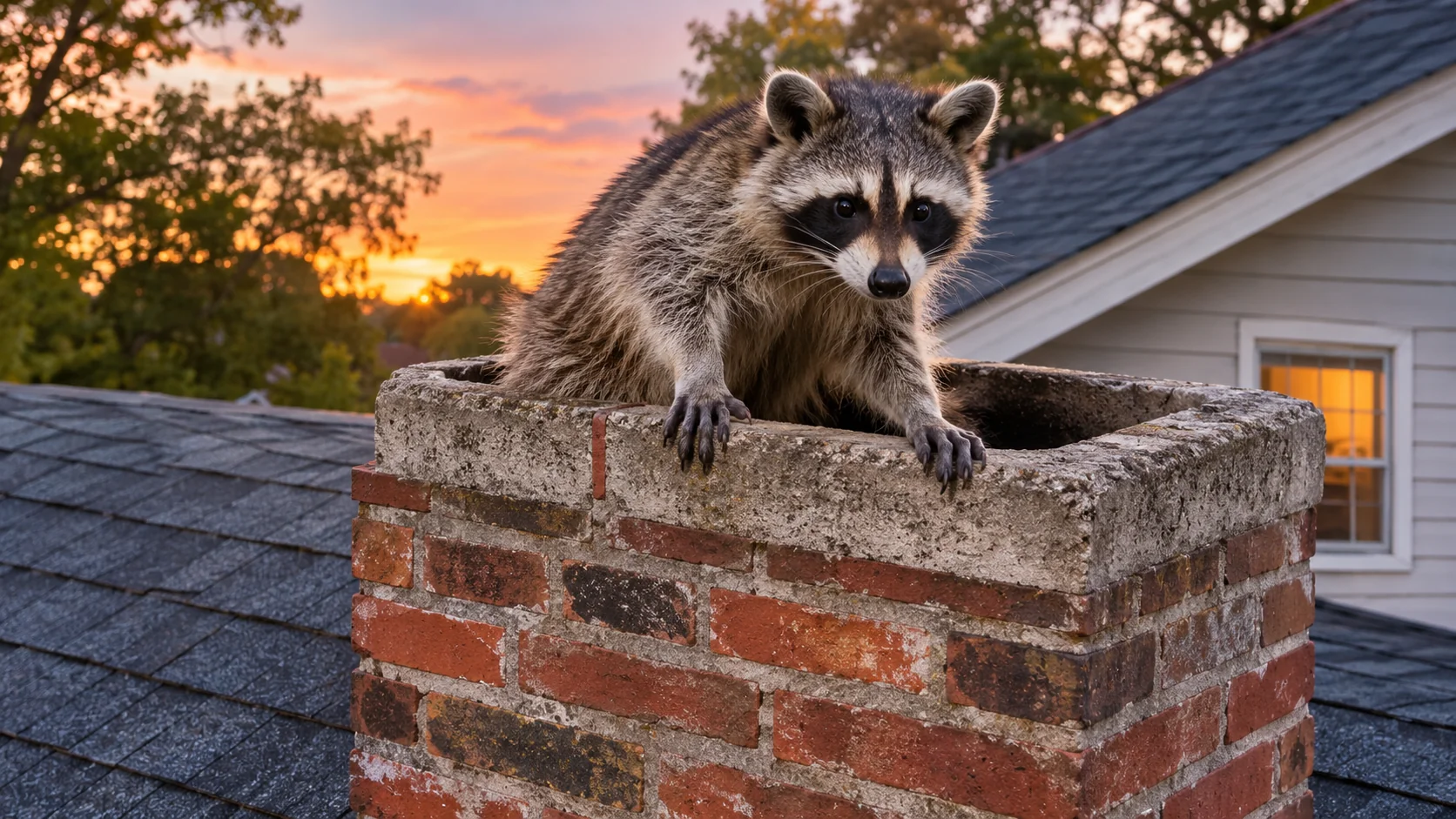
Heavy thumping in the chimney at dawn and dusk, chittering, and scratching just above the damper: a raccoon in the chimney is a common spring problem. Mothers look for a dry, sheltered den for their young, and an uncapped chimney fits the bill.
This guide covers how to confirm it, how to get the raccoon out safely, and how to keep raccoons out for good.
Signs of a Raccoon in the Chimney
- Heavy thumping or scratching above the damper, louder than birds or squirrels.
- Chittering, whimpering or crying sounds; kits make a lot of noise.
- Activity at dawn and dusk when raccoons leave and return.
- Droppings, food scraps or nesting material on the smoke shelf or in the firebox.
- A strong musky odor.
- Bent or missing chimney cap.
Why Raccoons Use Chimneys
Raccoons naturally den in hollow trees. A masonry chimney offers a similar dry, protected space. The smoke shelf above the damper is a flat ledge where mothers often have their kits. Raccoons are good climbers and can get up rough brick easily.
Risks of a Raccoon in the Chimney
- Rabies: raccoons are a common rabies carrier in parts of the United States.
- Raccoon roundworm: eggs in their droppings can be dangerous to people.
- Fleas, ticks and mites.
- Damage to the damper, flue and cap.
- Blocked flue: nesting material blocks venting and is flammable.
Never handle a raccoon or its droppings with bare hands.
How to Get a Raccoon Out of the Chimney
Call a Wildlife Professional
The safest choice is a licensed wildlife control operator. They can:
- Confirm whether kits are present.
- Remove kits by hand and reunite them with the mother outside.
- Use one way doors that let the raccoon out but not back in.
- Follow state laws on trapping and relocation, which vary.
Waiting It Out
If kits are present and the family is not causing harm, some people wait until the mother moves the young out. This often happens after several weeks. Keep the damper closed and do not use the fireplace.
Harassment Methods
Wildlife professionals sometimes use bright light, noise and an ammonia soaked rag on the smoke shelf to encourage a mother to move her kits. Leave this to professionals so kits are not abandoned in the flue.
What Not to Do
- Never light a fire or use smoke. Kits may die and the nest can ignite.
- Do not open the damper with the raccoon behind it; it may come into the house.
- Do not trap and relocate without checking your state’s rules.
- Do not cap the chimney while animals are inside.
After the Raccoons Leave
- Confirm the chimney is empty. A professional can check with a camera.
- Have the chimney swept to remove nesting material and droppings. Sweeps and wildlife pros use protective equipment for this.
- Check for damage to the damper and flue.
- Fit a strong chimney cap.
The Right Cap for Raccoons
Raccoons are strong and persistent. A flimsy cap held with a few screws can be pulled off. Look for:
- Heavy gauge stainless steel construction.
- Secure fastening: bolts tightened evenly, or a crown mounted cap anchored into the masonry.
- 3/4 inch mesh with no gaps.
- A cap that fits the flue snugly.
Multi flue caps anchored to the crown are hard for raccoons to remove and protect every flue at once.
Other Entry Points
Raccoons also use attics, roof vents and gaps where the chimney meets the roof. After capping the chimney, check for other openings and trim tree branches that give raccoons an easy route onto the roof.
Raccoon Season: When to Expect Them
Raccoons can use a chimney at any time of year, but spring is the peak. Mothers look for a safe, dry den to raise their young. Kits are born in spring and stay in the den for several weeks before they start to follow their mother outside.
| Season | What is happening | What to do |
|---|---|---|
| Late winter | Mothers search for dens | Cap the chimney now if it is not capped |
| Spring | Kits born in the den | Call a wildlife professional; do not use the fireplace |
| Early summer | Kits begin leaving the den | Family often moves on; cap after they leave |
| Fall | Raccoons may seek winter shelter | Check the cap is secure |
Capping a chimney before late winter is the best way to avoid the problem entirely.
Raccoon or Squirrel?
Squirrels also enter chimneys, but they sound different. Squirrels are lighter, faster and active in the daytime. Raccoons are heavy, slow and noisy at dusk and dawn, and kits make a distinct chittering or crying. Squirrels often fall down a flue and cannot climb back up, so you may hear frantic scratching from a single animal.
What a Wildlife Professional Will Do
A typical raccoon job looks like this:
- Inspection of the chimney and roof to confirm the animal and find the entry.
- Kit check: looking down the flue or using a camera to see if young are present.
- Removal: kits are often removed by hand and placed in a warm box outside for the mother to collect. Adults may be encouraged to leave with deterrents or one way doors.
- Confirmation that the chimney is empty.
- Capping the chimney or recommending a sweep to do it.
Laws differ by state on whether raccoons can be trapped and where they can be released. A licensed operator will know the rules.
Questions to Ask
- Are you licensed by the state for wildlife control?
- How will you handle kits?
- Do you guarantee the chimney is empty before capping?
- Will you clean droppings and nest material?
- Is the cap included, and what is it made of?
Cleaning After Raccoons
Raccoon droppings can contain roundworm eggs, which can survive for a long time. Cleanup should be done by people with protective equipment, including gloves and respirators, and with the right cleaning methods. Ask the wildlife company or sweep how they handle it. Do not sweep or vacuum droppings yourself.
Damage Raccoons Cause
Raccoons can:
- Tear damper plates and handles.
- Damage clay flue tiles and mortar.
- Pull off or bend caps.
- Rip flashing and roof shingles around the chimney.
A sweep should inspect the chimney after removal and before you use the fireplace again.
Choosing a Raccoon Proof Cap
| Feature | Good | Better |
|---|---|---|
| Material | Galvanized | Heavy gauge stainless |
| Attachment | Screws into tile | Bolts and band, or anchored to crown |
| Mesh | 3/4 inch | 3/4 inch heavy wire |
| Coverage | Single flue | Multi flue over the whole crown |
Fit the cap firmly and check it every year, because a determined raccoon will test it.
Keeping Raccoons Off the Roof
- Trim tree branches at least several feet back from the roof.
- Secure trash cans and remove pet food from outside.
- Close off gaps under decks and porches.
The fewer reasons raccoons have to visit, the less likely they are to test the cap.
Quick Checklist If You Think a Raccoon Is in the Chimney
- Keep the damper and fireplace doors closed.
- Do not light a fire or use any smoke.
- Keep children and pets away from the fireplace.
- Listen for kits, which make high chittering or crying sounds.
- Note when you hear activity, usually dusk and dawn.
- Call a licensed wildlife control operator.
- After removal, have the chimney swept and inspected.
- Fit a heavy gauge stainless cap that is bolted down or anchored to the crown.
- Trim branches and remove outdoor food sources.
Can You Prevent Raccoons Without a Cap?
Not reliably. Deterrents such as lights, noise and scent may move a raccoon on for a while, but an open flue will keep attracting new animals every spring. A properly fastened chimney cap is the only lasting fix, and it also keeps out rain, birds, squirrels and debris. If you have several flues on one chimney, cap all of them or use a single multi flue cap that covers the whole crown, because a raccoon only needs one open flue.
The Bottom Line
A raccoon in the chimney is usually a mother with kits looking for a den. Do not use fire or smoke. Call a licensed wildlife professional to get the family out humanely, have the chimney swept, and fit a heavy duty, securely fastened cap once the chimney is empty.
Frequently asked questions
How do I get a raccoon out of my chimney?
Call a licensed wildlife control operator. They can confirm whether kits are present and use humane eviction or one way doors, then you can cap the chimney.
Can raccoons get past a chimney cap?
Strong raccoons can bend or pull off flimsy, poorly fastened caps. A heavy gauge stainless cap that is bolted down securely keeps them out.
Will a raccoon leave the chimney on its own?
A mother usually moves her kits out once they are old enough, often after several weeks. Waiting can work, but cap the chimney as soon as they leave.