
Birds in Chimney: How to Get Them Out and Keep Them Out
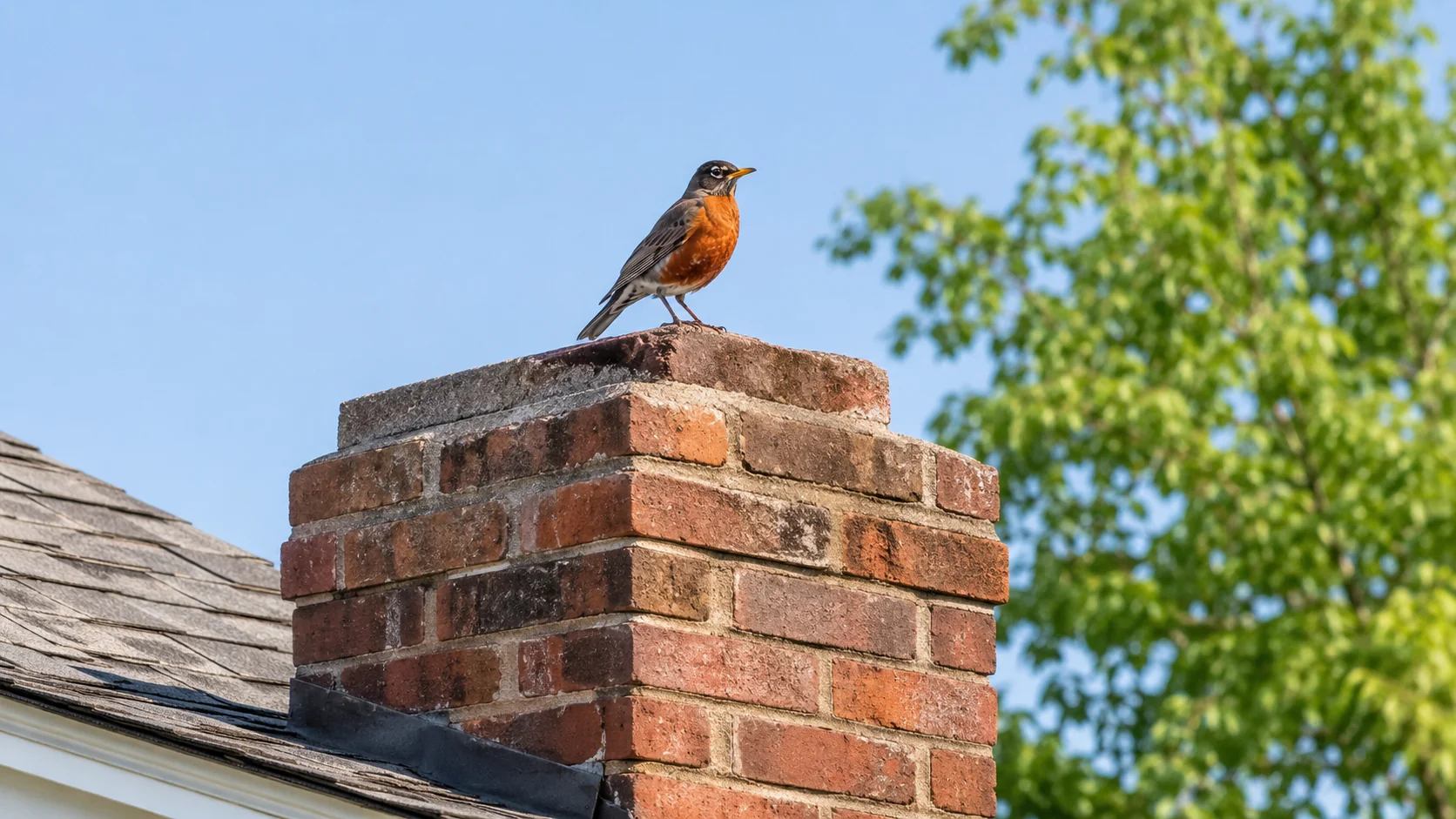
Key Takeaways
- Chirping, fluttering and twigs in the firebox are the classic signs of birds in a chimney.
- Chimney swifts are protected under the Migratory Bird Treaty Act. Do not disturb an active nest; cap the chimney after they leave in fall.
- A trapped bird can usually be guided out through the fireplace by darkening the room and opening a nearby door or window.
- Never light a fire to smoke birds out. It can kill them and set the nest on fire.
- A chimney cap with 3/4 inch mesh keeps birds out for good.
A chirping sound from the fireplace, a scatter of twigs on the hearth, or something fluttering behind the damper: you probably have birds in the chimney. An uncapped chimney looks like a perfect hollow tree to many birds, and some species nest there every year.
Here is how to deal with it safely and legally, and how to stop it happening again.
Signs of Birds in the Chimney
- Chirping or chattering, especially loud begging calls from nestlings.
- Fluttering or scratching sounds.
- Twigs, feathers or droppings in the firebox.
- Birds flying in and out of the chimney top, often at dusk.
- A musty odor.
Which Birds Nest in Chimneys?
Chimney Swifts
Chimney swifts are small, dark birds that cling to vertical surfaces and build small nests of twigs glued with saliva on the inside of the flue. They spend summers in eastern North America and migrate to South America in fall. Their numbers have declined, partly because of capped and lost chimneys.
Chimney swifts are protected by the federal Migratory Bird Treaty Act. It is illegal to harm them or remove an active nest. Wait until they leave in fall.
Other Birds
Starlings, sparrows, grackles, jackdaws and some owls may also enter or nest in chimneys. Starlings and house sparrows are non native and not covered by the same protections, but you should still avoid harming them and check local rules.
A Bird Trapped in the Chimney
Sometimes a bird falls down the flue and cannot climb back out.
How to Help It Out
- Close all interior doors to the room with the fireplace.
- Darken the room by closing curtains.
- Open a window or outside door near the fireplace.
- Open the damper or fireplace doors slowly and step away.
- Wait quietly. The bird will usually head for the light and fly out.
If the bird is stuck above the damper and cannot get down, call a wildlife removal service or chimney sweep.
What Not to Do
- Never light a fire to drive birds out. It can kill them, set the nest alight and start a chimney fire.
- Do not stuff the flue or use chemicals.
- Do not reach up into the flue with bare hands; birds can carry mites and diseases.
A Nest in the Chimney
Chimney Swift Nests
Leave them until the birds migrate, typically by late fall. The young are noisy for a few weeks, then they fledge. Once the chimney is empty:
- Have the chimney swept to remove nest material.
- Fit a chimney cap.
Some homeowners choose to leave a chimney open in summer for swifts and close it with a cap later. If you want to support swifts, you can also put up a dedicated swift tower.
Other Nests
For non protected species, a chimney sweep or wildlife professional can remove the nest when no eggs or young are present. Nests are flammable and block draft, so they must come out before you use the fireplace.
Health Risks
Bird droppings and nest debris can harbor fungi, mites and bacteria. Let professionals handle large amounts of debris, and avoid breathing dust.
How to Keep Birds Out for Good
Fit a Chimney Cap
A cap with 3/4 inch mesh, the standard for animal guards, keeps birds out. Make sure:
- It fits the flue snugly with no gaps.
- The mesh is intact.
- It is securely fastened so wind cannot lift it.
On chimneys with several flues, use a multi flue cap or cap every flue.
Check the Cap Each Year
Birds sometimes get in through torn mesh or a gap at the base. Inspect the cap during the yearly chimney inspection NFPA 211 recommends.
Timing
Cap the chimney in late fall or winter, after birds have left and before spring nesting begins. Never cap a chimney with birds inside.
Birds and Gas Appliances
Nests in a gas appliance flue are dangerous: they can block venting and push carbon monoxide into the home. If you see signs of birds in a gas flue, stop using the appliance and have it checked.
Chimney Swift Season in More Detail
Chimney swifts arrive in eastern and central North America in spring and leave for South America in fall. During that time a single pair usually nests in a chimney, while larger groups may use a chimney as a roost, especially before migration.
What to expect if swifts nest in your chimney:
- Nest building in late spring: a small half cup of twigs glued to the flue wall.
- Eggs and nestlings in early to mid summer.
- Noisy begging for a couple of weeks, often loudest when parents bring food.
- Fledging in late summer.
- Departure by fall.
The noise is short lived. Closing the damper and fireplace doors keeps it down and stops young birds falling into the room.
Can You Leave the Chimney Open for Swifts?
Some homeowners with unused masonry chimneys choose to leave them uncapped in summer to help swifts. If you want to do this:
- Only do it on a chimney you do not use.
- Keep the damper closed.
- Have the chimney swept every year after the birds leave.
- Never leave a gas, oil or wood appliance flue open to birds.
Metal flue liners and prefab chimneys are not suitable for swifts, because birds cannot cling to smooth metal and may become trapped.
How Birds Damage Chimneys
- Blocked flue: nests can block draft and send smoke or carbon monoxide into the home.
- Fire risk: dry twigs and leaves are flammable.
- Smells: droppings and dead birds cause odors, especially in humid weather.
- Pests: nests can host mites and insects that find their way indoors.
What a Sweep Does After Birds Leave
A sweep will:
- Inspect the flue with a camera or light.
- Remove nest material from the flue and smoke shelf.
- Clean droppings with suitable protective equipment.
- Check the damper, liner and crown.
- Fit or recommend a chimney cap.
Choosing a Cap for Birds
Any sound cap with 3/4 inch mesh will keep birds out. Features that help:
| Feature | Why it matters |
|---|---|
| Stainless mesh | Will not rust open |
| Snug fit | No gaps at the base |
| Bolted or banded attachment | Birds and wind cannot lift it |
| Removable lid | Easy cleaning |
| Multi flue design | Covers every opening on a large chimney |
If your chimney has a spark arrestor requirement, the finer mesh also blocks birds, but it may clog faster on wood burning flues.
Birds on Top of the Cap
Pigeons and other birds sometimes perch or nest on top of a chimney cap. This is usually harmless, but droppings can build up. A cap with a peaked lid gives birds less room to settle.
Birds in a Metal Flue or Vent Pipe
Birds sometimes fall into exhaust vents and prefab chimney pipes. They cannot grip the smooth sides and may die there. Fit the cap listed for the pipe or vent, which includes screening, and have trapped birds removed by a professional.
How to Tell If a Bird Is Alive or Dead
If the sounds stop suddenly and an odor develops, a bird may have died in the flue. Do not use the fireplace. Have a sweep remove it, because decay can attract insects and block the flue.
Quick Checklist for Birds in the Chimney
- Identify the birds if you can; chimney swifts are protected.
- Keep the damper and fireplace doors closed.
- Never light a fire to drive birds out.
- Guide trapped birds out through a darkened room toward an open window or door.
- Leave active swift nests until the birds migrate.
- Have the chimney swept once the birds have gone.
- Fit a cap with 3/4 inch stainless mesh and no gaps.
- Check the cap every year.
Do Chimney Caps Harm Birds?
A cap does not harm birds when it is fitted at the right time, when the chimney is empty. It simply stops them using the flue. The risk is capping a chimney with birds or nestlings inside, which traps them. That is why timing matters: cap in late fall or winter, after nesting season, and confirm the chimney is empty first. If you want to help chimney swifts, consider a purpose built swift tower in your yard instead of an open chimney.
The Bottom Line
Birds in the chimney are common and usually harmless if handled correctly. Guide trapped birds out through the fireplace, leave chimney swift nests until fall, never use fire to drive birds out, and fit a properly sized cap with intact mesh once the chimney is empty.
Frequently asked questions
How do I get a bird out of my chimney?
Close interior doors, darken the room, open a window or outside door near the fireplace, then open the damper and step away. The bird will usually fly toward the light.
Can I remove a chimney swift nest?
Not while it is active. Chimney swifts are protected by federal law. Wait until they migrate in fall, have the chimney swept, then cap it.
Will a chimney cap keep birds out?
Yes. A securely fitted cap with intact mesh keeps birds from entering or nesting in the flue.