
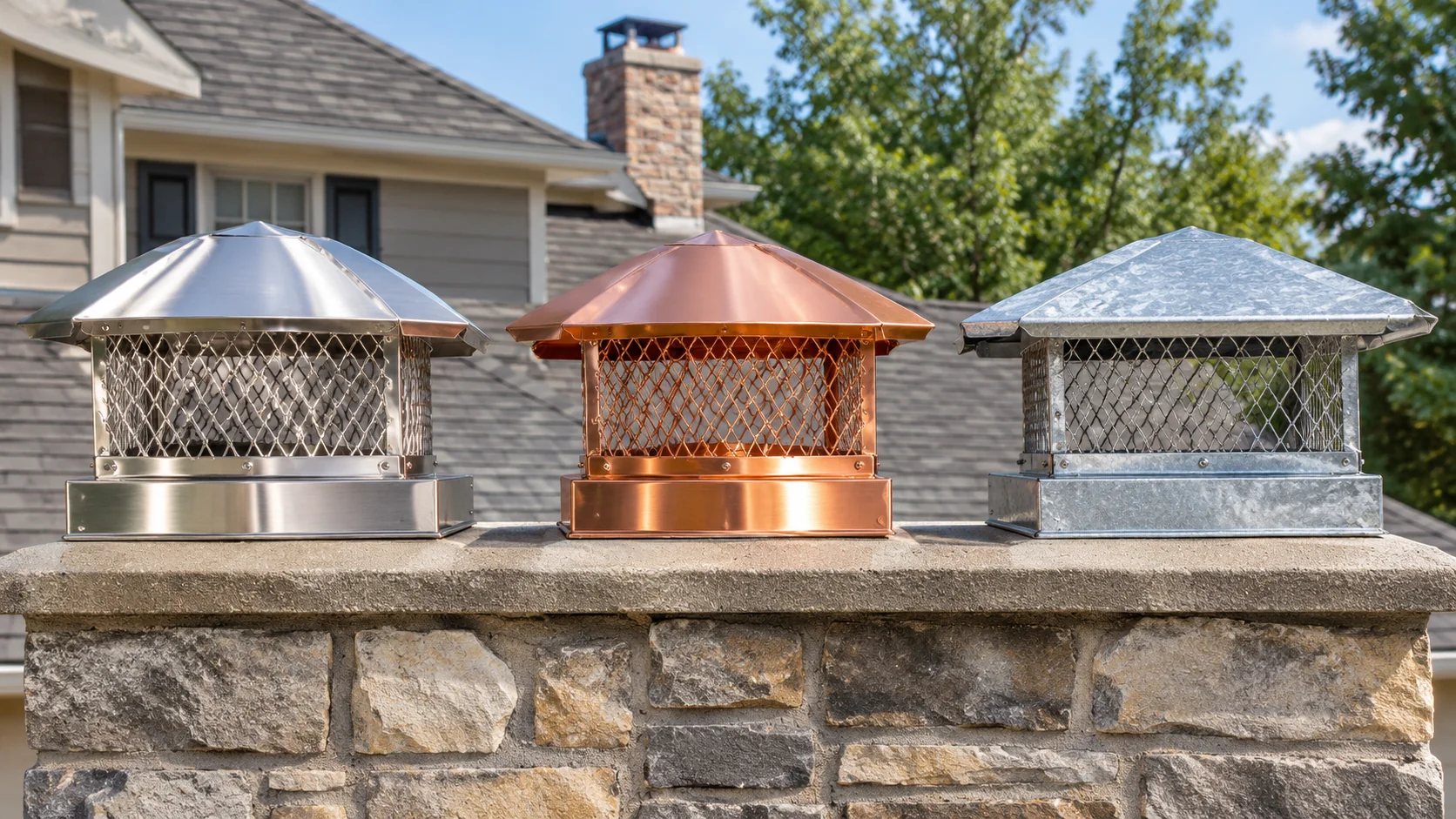
Stainless vs Copper vs Galvanized Chimney Caps
Key Takeaways
- Stainless steel is the best value for most chimneys: long life, every fuel, mid price.
- Copper lasts as long as stainless and looks premium, but costs much more and can stain light masonry.
- Galvanized is the cheapest but rusts once the zinc wears, so it suits gas or unused flues in mild climates.
- HY-C advises against black painted galvanized or aluminum caps when wood, oil, coal or pellets are the main fuel.
Every chimney cap is made from one of three main metals: stainless steel, copper or galvanized steel. A few gas vent caps use aluminum. The metal decides how long the cap lasts, which fuels it can handle, what it costs and how it looks.
This comparison puts the three side by side so you can pick the right one for your chimney.
The Short Answer
- Choose stainless steel for most chimneys and every fuel. It is the best value.
- Choose copper if the chimney is visible and you want a premium look that ages to a patina.
- Choose galvanized only for gas or unused flues in mild climates, or as a short term budget fix.
Side by Side Comparison
| Stainless steel | Copper | Galvanized steel | |
|---|---|---|---|
| How it resists corrosion | Chromium oxide film that heals itself | Forms a protective patina | Zinc coating that wears away |
| Lifespan | Decades | Decades | Shortest |
| Cost (cap only) | $50 to $500 (HomeGuide) | $200 to $800 (HomeGuide) | Lowest |
| Fuels | All | All | Gas, unused flues |
| Coastal homes | 316 grade best; 304 may tea stain | Good; patina forms faster | Poor |
| Appearance | Silver, can be powder coated | Penny, then brown, then green | Gray or black powder coat |
| Runoff staining | Little | Green streaks on light masonry | Rust streaks as it ages |
| Typical warranty | Often lifetime limited | Often limited lifetime | Shorter or not stated |
Stainless Steel Chimney Caps
Stainless steel contains chromium, which forms a thin oxide film on the surface. When scratched, the film reforms, so the metal keeps protecting itself. That is why stainless caps resist rust even when flue gases and weather attack them.
Grades
- 304 stainless is standard on most caps and works for most of the country.
- 316 stainless adds molybdenum for better resistance to salt and is worth it near the ocean.
Pros
- Long life.
- Works with wood, gas, oil, coal and pellets.
- Mid range price.
- Often a lifetime limited warranty.
Cons
- Costs more than galvanized.
- 304 can tea stain near salt water.
Copper Chimney Caps
Copper reacts with air and water to form a patina, which protects the metal underneath. A new copper cap is bright penny colored, turns brown within months and slowly develops green verdigris over years.
Pros
- Very long life.
- Handles all fuels.
- Premium appearance that suits historic and high end homes.
Cons
- Highest price; follows the copper market.
- Green runoff can stain light brick, stone and stucco.
- Must use copper, brass or stainless fasteners to avoid galvanic corrosion.
- Softer metal can dent.
Galvanized Steel Chimney Caps
Galvanized steel is carbon steel coated with zinc. The zinc corrodes first, protecting the steel. Once the zinc is gone, the steel rusts. Many galvanized caps also have a black powder coat.
Pros
- Lowest price.
- Widely available in hardware stores.
- Black finish blends with dark roofs.
Cons
- Shortest life, especially on wood, oil and coal flues.
- Rust streaks stain masonry as it ages.
- Not recommended for solid fuel or oil. HY-C’s product guide advises against aluminum or black painted galvanized covers when wood, oil, coal or pellets are the main heat source.
What About Aluminum?
Aluminum does not rust and is light, but it softens at high temperature and is attacked by acidic flue gases. It is used mainly on gas vents and B-vent pipe. HY-C groups it with black painted galvanized as not recommended for wood, oil, coal or pellets.
Which Material for Which Fuel?
| Fuel | Best | Acceptable | Avoid |
|---|---|---|---|
| Wood fireplace or stove | Stainless, copper | Galvanized, aluminum | |
| Pellet | Stainless, copper | Galvanized, aluminum | |
| Oil | Stainless, copper | Galvanized, aluminum | |
| Coal | Stainless, copper | Galvanized, aluminum | |
| Gas | Stainless, copper | Galvanized, aluminum | |
| Unused flue | Any | Galvanized |
Which Material for Which Climate?
- Wet climates: stainless or copper. Galvanized wears faster.
- Coastal homes: 316 stainless or copper. Rinse 304 stainless now and then.
- Dry inland climates: galvanized lasts longest here, but stainless still lasts longer.
- Heavy snow: any metal works; choose a thicker hood and 3/4 inch mesh to avoid icing.
Cost Over Time
Installation costs the same whatever the material. Angi puts professional installation at about $100 to $200 on a simple cap. That means a cheap galvanized cap can end up costing more over the life of the chimney if it has to be replaced and reinstalled several times, while a stainless cap is installed once.
Copper costs the most up front but, like stainless, is usually a one time purchase.
Mixing Metals
Avoid letting copper touch galvanized steel or aluminum, because galvanic corrosion eats the less noble metal. Use stainless fasteners with stainless caps and copper compatible fasteners with copper caps. If a copper cap sits above aluminum gutters or galvanized flashing, water running off the copper can corrode them over time.
How to Tell What Your Current Cap Is Made of
- Magnet test: 304 and 316 stainless are mostly non magnetic. Galvanized steel is strongly magnetic.
- Color: copper is orange, brown or green. Galvanized is dull gray or painted. Stainless is bright or dull silver.
- Rust: orange rust usually means galvanized or plain steel.
Choosing Between Them
Ask yourself:
- What do I burn? Wood, oil, coal or pellets rule out galvanized.
- Is the chimney visible? If yes and budget allows, consider copper.
- Do I live near salt water? Choose 316 stainless or copper.
- How long will I stay? Short stays may justify galvanized on a gas flue; long stays favor stainless.
- Is the masonry light colored? Avoid copper if staining would bother you.
Which Metal for Which Roof and Home Style?
| Home and roof | Good match |
|---|---|
| Asphalt shingle, any color | Stainless or black powder coated stainless |
| Dark metal roof | Black powder coated stainless |
| Slate or tile roof | Copper or stainless |
| Historic brick home | Copper |
| Modern home with light stucco | Stainless (avoid copper staining) |
| Cedar shake roof | Stainless with spark arrestor |
Powder coated stainless gives you the dark look of painted galvanized without the rust.
Metal Thickness and Gauge
Metal thickness matters as much as the type. Thin metal dents, flexes in wind and wears out faster. Thickness is often given as a gauge number, where a smaller number means thicker metal.
When comparing caps:
- Check the stated gauge or thickness on the listing.
- Compare the lid and the frame, not just the mesh.
- Look at the warranty, which often reflects the maker’s confidence.
Warranty Differences
Many stainless caps carry a lifetime limited warranty against rust through or defects. Copper caps often carry a limited warranty too. Galvanized caps usually carry shorter coverage or none. Read the terms, because most warranties exclude damage from improper installation, chimney fires, storms or animals.
Maintenance by Material
Stainless
- Rinse occasionally near the coast.
- Clean tea staining with a stainless cleaner.
- Never use steel wool or carbon steel brushes.
Copper
- No coating needed; the patina protects it.
- Clean with a copper cleaner if you want to keep it shiny, but most owners let it age.
Galvanized
- Inspect for rust every year.
- Touch up small spots with a primer made for galvanized metal and high heat paint.
- Replace when rust goes through.
Resale and Appearance
A copper cap on a visible chimney can add a premium touch that buyers notice. A rusty galvanized cap does the opposite, leaving streaks that suggest poor maintenance. Stainless is neutral: it looks clean and lasts.
Common Mistakes
- Buying galvanized for a wood stove to save money, then replacing it a few years later.
- Buying 304 stainless for a home right on the coast when 316 was worth the extra cost.
- Mixing a copper cap with steel screws, which corrode.
- Choosing copper above light stone or stucco, then being surprised by green streaks.
Quick Decision Guide
- Burn wood, oil, coal or pellets? Stainless or copper.
- Burn gas only, in a dry climate, on a tight budget? Galvanized is acceptable.
- Near salt water? 316 stainless or copper.
- Visible historic chimney? Copper.
- Not sure? 304 stainless.
The Bottom Line
Stainless steel is the right chimney cap material for most homes: it lasts for decades, handles every fuel and costs far less than copper. Copper is the upgrade for visible, high end chimneys. Galvanized is the budget option for gas and unused flues in mild climates. Whichever you choose, size it correctly and fasten it with compatible hardware.
Frequently asked questions
Stainless steel vs galvanized chimney cap: which is better?
Stainless is better for almost every chimney because it does not depend on a coating to resist rust. Galvanized only wins on price.
Copper vs stainless steel chimney cap: which is better?
Both last for decades. Stainless is the better value; copper is the better looking choice for visible chimneys.
Which chimney cap material lasts longest?
Stainless steel and copper both last for decades when installed and maintained properly. Galvanized lasts the least.